Best Online Keno Casinos in Australia: Key Limits
 Available in AU

Table of Contents
- What “Best Keno Casino” Can Mean in Australia
- Real-Money Play and the Risks You Cannot Hand Off
- When Keno Searches Lead to Machine-Game Results
- What the Available Facts Can—and Cannot—Tell You About Keno Games
- Machine-Game Mechanics: Don’t Mistake Pokie Facts for Keno Facts
- Free-Play Keno: What Is Not Verified Here
- Randomness, Software and the Limits of a Keno Strategy
- Canadian Keno Searches and the Card-Payment Caveat
- Keno Casino Claims: Check the Limits of the Evidence
- Bonuses, Bitcoin Searches and the Cost of Turnover
Australian licensing limits, game-specific evidence and payment or bonus caveats shape what keno casino comparisons can establish.
What “Best Keno Casino” Can Mean in Australia
For an Australian reader, “best” cannot straightforwardly mean the strongest locally licensed online keno casino. There is no Australian-licensed online casino, and the law does not provide a domestic licensing route for companies to offer real-money online casino games to people in Australia. The distinction matters: a website may describe itself as a casino or advertise keno, but that description does not make it an Australian-regulated service.
The Interactive Gambling Act 2001 sets the framework. It makes it illegal for companies to offer real-money online pokies to Australian residents without a domestic licence, and no such licences have been issued. The wider rules also treat online casino-style games offered to people in Australia as prohibited interactive gambling services. In practical terms, there is no locally licensed online casino against which an Australian player can compare an online keno service.
That is the central limit behind any claim to be the best online casino for keno in Australia. A ranking can compare what a site says it offers, but it cannot turn an offshore operator into a locally licensed one. Nor should a polished website, an Australian-facing page or familiar payment branding be read as proof of Australian approval. The legal status depends on the service and the rules that apply, not on how convincingly a site presents itself.
When choosing an online casino for keno in Australia, it helps to check the available operator details before deciding where to play. Use this list as a reference for the licensing and payment details provided for each option.
1. Playfina Casino
License: Curacao eGaming (Hollycorn N.V., since 2017) · Min. deposit: A$20-30 (depends on the offer) Playfina Casino is listed with a Curacao eGaming licence held by Hollycorn N.V. since 2017. Its minimum deposit is A$20–30, depending on the offer.
2. Roby Casino
License: Curacao eGaming (Roby Games Ltd) Roby Casino is listed with a Curacao eGaming licence held by Roby Games Ltd. The licensing detail is the available point to consider when reviewing this option.
3. Wild Tokyo
License: Curacao · Payout speed: crypto 30-60 minutes, fiat 1-5 days · Min. deposit: A$10 Wild Tokyo lists a Curacao licence and a minimum deposit of A$10. Its stated payout times are 30–60 minutes for crypto and 1–5 days for fiat.
4. SpinsUp
License: Curacao Gaming Control Board OGL/2023/174/0082 (Dama N.V.) SpinsUp is listed with Curacao Gaming Control Board licence OGL/2023/174/0082, held by Dama N.V. This licensing information is the available detail to consider for this option.
5. Thor Casino
License: Curacao – Antillephone N.V. (Versus Odds B.V.) · Min. deposit: EUR 20 Thor Casino is listed with a Curacao licence from Antillephone N.V. (Versus Odds B.V.). Its minimum deposit is EUR 20.
6. GoldenCrown
License: Curacao Gaming Control Board OGL/2023/176/0095 (Hollycorn N.V.) GoldenCrown is listed with Curacao Gaming Control Board licence OGL/2023/176/0095, held by Hollycorn N.V. The licensing detail is the available point to consider when reviewing it.
7. LevelUp Casino
License: Curacao eGaming OGL/2023/174/0082 (Dama N.V.) · Min. deposit: A$15 LevelUp Casino is listed with Curacao eGaming licence OGL/2023/174/0082, held by Dama N.V. Its stated minimum deposit is A$15.
8. JustCasino
License: Curacao Gaming Control Board JustCasino is listed with a Curacao Gaming Control Board licence. That licensing information is the available detail to consider for this option.
9. Lucky Dreams
License: Curacao · Min. deposit: A$20 (POLi) Lucky Dreams lists a Curacao licence and a minimum deposit of A$20 when using POLi. These are the stated details to weigh when considering it.
10. DragonSlots Casino
License: Curacao Gaming Authority (Jumpman Gaming Ltd) DragonSlots Casino is listed with a Curacao Gaming Authority licence held by Jumpman Gaming Ltd. The licensing information is the available point to consider for this option.
The Australian Communications and Media Authority, or ACMA, is the main domestic regulator enforcing the Interactive Gambling Act. Its role is relevant to access as well as the law on paper: ACMA identifies illegal offshore gambling sites for blocking, and Australian internet service providers must follow the resulting blocklist. So an offshore casino’s availability is not a reliable sign that it is accepted or authorised in Australia. Access can be restricted, and a site that appears reachable at one moment should not be treated as locally licensed on that basis.
Keno adds another wrinkle because the word can describe different kinds of products. A reader may be looking for a number-draw game, a casino-style game, or a game presented within an online casino. Those labels do not settle the regulatory question. What matters for this market context is whether a company is offering real-money online gambling to people in Australia and how that service is treated under the law. A casino label does not create an exception to the rules that apply to prohibited online casino services.
This also changes what “best” can reasonably mean. It may reflect what a player hopes to find—an online place to play keno for money—but a list of offshore websites would not amount to a list of Australian-licensed casinos. Describing such a list as a local ranking could blur a consequential difference: a site serving Australian visitors is not thereby authorised in Australia. The word “best” cannot resolve that difference, and a comparison should not imply otherwise.
Live dealer casinos online in Australia: legal limits
The relevant distinction is therefore not simply between a good and a poor keno experience. It is between a locally licensed online casino—which does not exist in Australia—and an offshore service that may present itself to Australian visitors despite the domestic restrictions and blocking framework. For an Australian audience, calling an offshore site an Australian online casino would suggest a status it does not have.
The result is a more limited meaning for the phrase “best keno casino” in this country. It can express what someone is seeking, but it cannot identify a locally licensed online casino, because there is none. ACMA’s enforcement and the ISP blocklist are part of the practical landscape, not minor qualifications to a conventional consumer ranking. Any description of online keno for Australians needs to keep that landscape visible rather than letting the word “best” imply local approval.
Real-Money Play and the Risks You Cannot Hand Off
The legal distinction is between the person placing a bet and the business providing the service. Australia’s Interactive Gambling Act targets operators that offer prohibited online casino gambling to people in Australia; it does not impose a penalty on an individual simply for using an offshore site. That distinction is not a guarantee of protection. A site accepting Australian customers may still be operating outside the rules that apply to Australian providers, and access to offshore services can be blocked.
No Local Recourse
If an offshore casino refuses to release your winnings, you have no legal recourse in Australia against that operator.
If you choose to play keno for real money offshore, the practical risk is that a dispute may have nowhere useful to go in Australia. If the casino refuses to release winnings, Australian players have no legal recourse in Australia against that offshore operator. A displayed balance is not the same as money in your bank account, and a support conversation does not create an Australian enforcement route. The inconvenience is not merely procedural: the party holding the funds is beyond the ordinary protections available through a domestic provider.
That is why the phrase “real-money play” deserves more attention than the game label. Whether a page describes online keno or another casino product, you are dealing with an operator, its account rules and its decision-making over withdrawals. Do not treat a payment method, a polished website or a claim about customer support as proof that winnings will be paid. Nor should you assume that a familiar-looking set of keno casino rules gives you the same remedies you would have with a locally regulated service.
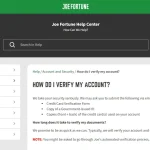
Age is a basic boundary. The legal gambling age in Australia is 18, including for online pokies. A person under that age should not gamble online. For adults, the more immediate account issue is identity verification. A specialist review describes offshore casinos as requiring documents before a first withdrawal; these checks can involve a photo of your identity document and proof of address, and may also involve a selfie holding the document. Requirements can differ between operators, so read the account and withdrawal terms before depositing rather than discovering the document request after a win.
Verification is not just a box to tick. Your name and address details need to match the information held by the operator, and documents must be submitted through a channel you can identify as belonging to the service. If a withdrawal is delayed, the operator may point to verification or other account conditions. That does not give you an Australian route to compel payment, but understanding the stated process can help you avoid preventable account disputes. Be cautious about sharing identity documents with a business whose status and handling of personal information you cannot independently establish.
Responsible-gambling controls can help you set boundaries, but they do not turn an offshore account into an Australian-licensed one. Common tools include deposit limits, loss limits and session time limits, as well as self-exclusion, which is a request to block your own access. Check what each setting actually controls and whether it applies to the account you are using. A limit is useful only if it is clear, active and difficult to undo in a moment of impulse.
BetStop, Australia’s national self-exclusion register, applies only to Australian-licensed operators. It does not bind offshore sites. Since there is no Australian-licensed online casino, registering with BetStop should not be treated as a way to block access to an offshore keno account. If gambling is becoming difficult to control, do not rely on an offshore operator’s tools alone; seek support from an appropriate Australian gambling-help service.
Do
- Use deposit, loss, and session time limits
- Verify your identity before depositing
- Seek professional Australian gambling-help services
Don’t
- Rely on BetStop to block offshore keno accounts
- Share ID documents with unverified businesses
- Assume offshore tools replace local protections
The hard choice in real-money online keno is therefore not only whether to play, but how much protection you are willing to give up. Australian law does not make the player the enforcement target, yet that does not supply a local remedy if an offshore casino withholds winnings. Limits and verification checks may affect how an account works; they cannot hand that risk to someone else.
When Keno Searches Lead to Machine-Game Results
Keno and pokies can appear together in casino-related listings, but that does not make them the same game. A result that combines the words “keno” and “pokies” may refer to separate categories, a themed product, or simply a broad label. The wording alone cannot tell you which. Before relying on a description, check whether it identifies a keno game, a pokie, or both—and whether the details actually apply to the game you are considering.
The distinction matters because figures attached to one type of game do not automatically describe another. For pokies, a Random Number Generator (RNG) determines the result of each spin, with each spin separate from the one before it. That explains a specific feature of pokie play; it does not establish how a keno draw is generated, how a keno game works, or what its odds might be. A general claim about casino software is not a substitute for information about the particular game.
Return-to-player, or RTP, figures need the same care. RTP describes the share of stakes a game is designed to return over the long run; it is not a promise about an individual session. A specialist review reports that some providers let operators choose between different RTP configurations for the same pokie. If so, a title’s name alone may not identify its setting. You would need information tied to the specific version being offered, rather than assuming that a figure attached to the game elsewhere applies here.
That point is narrow: it concerns certain pokies and their possible configurations. It does not show that a keno game has an RTP setting, that any particular keno product is available, or that a keno result follows the same process as a pokie spin. Those conclusions require game-specific evidence. Similar labels, shared screens, or a casino-style presentation are not enough to establish shared mechanics.
This is especially important when descriptions use “slots” as a loose synonym for machine games. A phrase such as “keno slots” could leave you unsure whether the listing means a keno game, a pokie with keno imagery, or two separate categories displayed together. Read the game’s own description for what it actually says, and do not carry over a pokie’s stated RTP or randomness information unless the claim clearly identifies the same game and setting.
The same caution applies to claims about live play. “Live” may describe a presentation, but that word by itself does not tell you whether a game is streamed, how results are produced, or whether the product is keno at all. Look for a clear explanation of the game being described. If the page supplies only general statements about pokies or casino games, those statements should not be treated as evidence about live keno.
Instant Payout Online Casinos in Australia: What to Check
A sound comparison begins by keeping the categories separate. For a pokie, look for the game-specific RTP information and note whether it refers to the configuration actually offered. For keno, look for information that names keno and describes that game, rather than borrowing facts about pokie spins. If the description blurs the two, its wording does not resolve the uncertainty.
This distinction is useful even when a listing presents several game types under one heading. A shared menu is not proof of shared rules, and a familiar game name is not proof that the listed version has the same settings as another one. Treat claims according to the game they explicitly describe: pokie facts belong to pokies, while claims about keno need to stand on their own.
What the Available Facts Can—and Cannot—Tell You About Keno Games
A return-to-player figure can look like a useful way to compare games, but it only means something when it belongs to the specific game being assessed. Information about pokies does not establish the return rate of a keno game, even if both appear in the same online casino. A figure attached to one type of game should not be carried across to another by assumption.
A specialist review reports that some game providers let casinos choose between different return settings for a particular pokie. That means the same pokie may have different stated return percentages at different casinos. This is a claim about pokie settings; it is not evidence that keno games use the same arrangement. Nor does it tell you what return rate, if any, applies to a particular keno game.
When a keno listing gives a percentage, check what the figure refers to before treating it as a comparison. Is it explicitly tied to the named keno game, or does it describe another game in the casino’s catalogue? Does the wording identify a return setting, or is it a general promotional claim? If the game and the figure do not clearly match, the number cannot tell you much about that game.
The same care applies to statements about randomness. A pokie spin is generated as a separate random event, so a previous spin does not determine the next one. That fact describes pokie spins. It does not confirm how a keno game selects numbers, how its software works, or whether a claim about a particular keno draw is accurate. The shared presence of casino software is not a reason to treat distinct games as having identical mechanics.
For keno, read the information attached to the particular game rather than inferring its features from a pokie page or a casino-wide statement. Look for descriptions that name the keno game and explain the relevant rules in plain language. A general claim about fairness or returns is less informative if it does not specify which game it covers and what the claim measures. If details are unclear, the prudent conclusion is that the claim has not been explained well enough to support a comparison.
A general claim about fairness or returns is less informative if it does not specify which game it covers and what the claim measures.
This distinction matters whether you encounter keno on a casino website or through an app. A platform may present several kinds of games together, but their labels, return figures and descriptions are not interchangeable. An app listing or casino catalogue can show where a game is presented; it does not, by itself, verify a keno game’s return rate or technical operation.
Those are keno-specific questions, and pokie facts do not answer them.
That may leave less to compare than a polished game page suggests. A stated percentage is useful only when its connection to the specific keno game is clear; a description of random pokie spins cannot fill in missing details about keno. Treating the boundary seriously is more reliable than borrowing certainty from a different game.
Machine-Game Mechanics: Don’t Mistake Pokie Facts for Keno Facts
A search for keno played on a machine can make two different game labels appear interchangeable. They are not evidence of the same mechanics. Information about pokies may help you assess a claim about a pokie, but it cannot establish how a keno game works or whether a particular keno game is available.
One specialist review reports that some game providers let casinos choose between several return-to-player (RTP) settings for a given pokie. RTP is a stated return figure for that game setting. Where a provider offers this choice, the same pokie could have different stated returns at different casinos. That is a claim about pokie configurations, not a general rule for every game.
The distinction matters when you are comparing a machine-style keno title with a pokie. A return percentage presented for a pokie does not describe keno merely because both are shown on a screen or grouped under casino games. Nor does the existence of selectable RTP settings for some pokies prove that a keno game has equivalent settings. Treating the figures as interchangeable would turn a limited claim about one game type into a broader claim it does not support.
The same caution applies to a proposed keno machine strategy. A percentage, setting or explanation attached to a pokie cannot, by itself, show what choices a keno game offers or how those choices affect its outcome. Without information specific to the keno title, there is no sound basis for borrowing a pokie strategy and presenting it as a keno method. A strategy label is not evidence of an advantage.
When reading a game description, check what exact game the statement refers to and whether it identifies the relevant setting. If a return figure is given for a pokie, keep it attached to that pokie; do not carry it across to keno. If a claim describes keno mechanics but relies only on a pokie’s RTP options, the supporting information does not match the claim.
This is a narrow distinction, but an important one: a fact can be useful without answering every question nearby. Pokie RTP settings may affect how a particular pokie is configured. They do not establish keno machine mechanics, keno returns or a winning approach. A careful comparison leaves those claims separate rather than filling the gap with assumptions.
Free-Play Keno: What Is Not Verified Here
“Free play” can describe different things: a game that uses no real-money stake, or a promotion that supplies credits under conditions. Those meanings are not interchangeable. A label alone does not tell you whether a keno game is available to try, whether registration is required, or whether any balance can later be withdrawn.
Attention: A "free play" label does not guarantee that a game is available without registration or that any resulting balance can be withdrawn.
That distinction matters when you are looking for a keno game to play without depositing money. It would be misleading to name a particular free version or describe its rules as though its availability and terms had been established. The phrase “free keno” is not enough to confirm what a particular operator provides.
If a site presents a free-play option, read the terms attached to that option before using it. Check whether it is a demonstration with no cash value or a promotional offer with conditions. Look for any limits on access, how credits are awarded or used, and whether winnings are withdrawable. Do not assume that a free-play balance converts to cash, or that a game labelled free has no conditions.
The same care applies to wording such as “online keno” or “play keno.” A page may use those words while describing a game, an offer, or a general category; the wording itself does not establish the mechanics. A clear description should explain what you can do, what—if anything—you must provide, and what happens to any balance at the end. If those points are not stated plainly, you cannot infer them from the label.
Free-play claims should also be kept separate from claims about real-money keno. A no-stake demonstration, if offered, would not by itself show that a real-money version is available, or establish its rules, odds or software. Nor does information about pokie games answer those questions for keno. The two game types should not be treated as interchangeable simply because a page groups them together.
For Australian readers, the practical point is modest but important: do not treat “free” as a guarantee of a particular game or a particular arrangement. Establish what the offer means from its own terms before relying on it. Without that detail, the most accurate description is simply that the label is ambiguous—not proof that a specific free keno option exists.
Randomness, Software and the Limits of a Keno Strategy
A strategy is only useful when it matches how a game works. That is why claims about keno software need to be kept separate from what is known about pokies: a fact about one does not explain the other.
For pokies, each spin is generated separately by a Random Number Generator, or RNG. In practical terms, the result of one spin does not determine the result of the next. A run of wins or losses is not, by itself, evidence that a different outcome is due. Nor does a player’s choice to wait, change stakes or press a button make a future result predictable.
That boundary matters when you encounter advice that treats a keno game like a pokie, or describes a “keno slot” as though the same rules must apply. Similar labels or screen formats do not establish that games use the same software or generate results in the same way. The RNG information about pokies should not be used to make claims about how a keno draw is produced.
A keno strategy may refer to choosing numbers, changing a stake or following a pattern. But a confident explanation is not proof that the method can influence results. Before relying on advice, check what it actually describes: the rules of a specific game, a general betting routine, or merely a sequence someone says worked for them. Those are different things. A story about past results cannot establish that a pattern will continue.
The same caution applies to claims about a keno game presented in a slot-style format. “Keno slot machine” can describe how a game looks to a player, but appearance alone does not tell you how its software selects outcomes. Nor does it establish that a strategy developed for a pokie carries over to keno. A useful explanation should identify the game and the mechanism it is discussing, rather than rely on labels.
There is no sound reason to treat a pokie’s previous spins as clues to its next result: the RNG makes each spin a separate event. But that does not settle questions about keno software, and it does not validate a keno slots strategy. Keep the claim within its proper scope. Where advice jumps from pokie randomness to keno, ask what connects the two; without a demonstrated connection, the strategy is an assertion, not a conclusion.
Canadian Keno Searches and the Card-Payment Caveat
References to Canada can make a keno result look relevant to an Australian player, but a country label alone does not establish where a game is offered, who can access it or what rules apply. The same caution applies to pages describing online keno for Canadian players: their wording is not evidence that the service is available to Australians or that its terms are suitable for them.
The phrase “four-card keno” may describe a format involving several cards, while “multi-card keno” suggests playing more than one card. Those labels are not enough to confirm how a particular game works. Without clear rules for the game in question, you cannot safely infer how cards are selected, how wins are calculated or whether multiple cards change the stakes. Treat the name as a description to investigate, not as a promise of a particular feature.
Fast payout online casinos in Australia: what to check
The location of a casino and the location of the player also matter. A page aimed at Canada may use different payment arrangements and terms from those encountered by someone in Australia. Before relying on any description, check the operator’s rules for the specific game and whether they explicitly cover your location. Do not take a Canadian label as confirmation of access, protection or a particular keno product.
Payment deserves a separate check. A specialist gambling review warns that a credit or debit card deposit may be classified by the bank or card issuer as a cash advance. That can mean a fee of 3–5% and interest starting immediately. Whether that treatment applies depends on the issuer and transaction; a payment option shown on a casino page cannot settle that question. Check your card’s terms or ask the issuer before making a gambling transaction. This is a cost warning, not a recommendation to deposit by card.
If a card deposit is treated as a cash advance, the cost may arise outside the casino’s own terms, so it can be easy to overlook when comparing payment methods. Read the relevant terms before acting, and do not assume that a payment method described for a Canadian audience will work the same way for an Australian cardholder. A country tag, a multi-card label and a familiar payment logo each leave practical questions unanswered.
Keno Casino Claims: Check the Limits of the Evidence
A site’s use of the word “keno” does not, by itself, establish what game it offers, who operates it or what regulatory status applies. The label may sound specific, but it is not proof of a particular format or of an Australian licence.
The central point for Australian readers is straightforward: there is no Australian-licensed online casino. So a claim that an online casino is licensed in Australia should not be treated as evidence that such a local licence exists. A polished presentation, familiar terminology or a page devoted to keno cannot change that.
This matters when comparing claims about keno casinos. A description may tell you how a site presents a game, but it does not establish that the service has Australian authorisation. Nor does the presence of a keno category prove that the games in it share rules, features or odds. Those details need to be stated and supported individually; the category name alone cannot carry that weight.
Keep the distinction clear: a claim about a keno game is not the same as a claim about the operator, and neither is proof of Australian licensing. In this market, the absence of an Australian-licensed online casino is the relevant baseline. Treat broad assurances of local licensing with particular care rather than reading them as confirmation.
That is a narrow conclusion, but an important one. It does not identify a catalogue of games or verify a particular casino’s claims. It simply sets the boundary for what the phrase “online keno casino” can establish for an Australian reader: a product label is not a licence.
Bonuses, Bitcoin Searches and the Cost of Turnover
A bonus can look generous until you work out its wagering requirement. This is the turnover multiplier: how much you must bet before bonus-related winnings become withdrawable. The amount is calculated from the bonus alone or, under some terms, from the deposit plus bonus. Those two bases produce very different totals.
A specialist review recommends treating requirements of 35x or less as preferable and describes anything above 40x as punishing. That is the review’s judgement, not a universal rule. The calculation itself is less subjective. On a $500 bonus with a 40x requirement, you would need to place $20,000 in bets before withdrawing winnings tied to the offer. A large figure on the bonus line can therefore conceal a much larger turnover obligation.
The calculation grows further if the terms apply the multiplier to both deposit and bonus. For instance, a $500 deposit combined with a $500 bonus under a 35x requirement means $35,000 in required bets. Read the offer’s wording to establish which amount is multiplied, which games count, and whether winnings remain restricted until the requirement is met. A multiplier alone does not tell you every condition.
Free spins have a separate point to check: a specialist review reports that offers may cap the winnings that can be cashed out. If a cap applies, winning more does not necessarily mean you can withdraw the full amount. The cap and any associated conditions need to be clear before you accept the offer.
Bitcoin in a keno promotion or its description is not proof that Bitcoin deposits are available. The wording does not establish a payment option, and it should not be treated as one. For any offer, the useful comparison is not the headline bonus but the written terms governing turnover and withdrawal.
What is the cost-benefit calculation of casino promotions?
Check the wagering requirement and what amount it applies to: a $500 bonus at 40x requires $20,000 in bets, while a 35x requirement on a $500 deposit plus a $500 bonus requires $35,000. Also check for cash-out caps on free spins and withdrawal limits, which can restrict how much you can collect and when.
Are online pokies legal for Australian players?
Australian companies cannot offer real-money online pokies without a domestic licence, and no Australian online casino licences have been issued. The law targets operators rather than individual players, and Australians can legally play on offshore sites that accept them, but those sites are not locally licensed and ACMA may block access.
What does “wagering requirement” actually mean?
It is the turnover multiplier that tells you how much you must bet before you can withdraw bonus-related winnings. For example, a $500 bonus with a 40x requirement means $20,000 in bets; if the requirement applies to a $500 deposit plus a $500 bonus at 35x, it means $35,000 in bets.
Pokies

Online Pokies in Australia: Legal and Practical Checks
Australia has no licensed real-money online casinos; offshore site terms, payment options and cash-out conditions...

Aussie Online Casinos: Legal Status and Safety Checks
Australian law distinguishes offshore casino sites from locally licensed services, while site terms shape withdrawals,...

Aussie Pokies Online in Australia: What to Know
A guide to free play, random outcomes and the practical limits of payment, bonus and...

Australian online pokies: a real-money play guide
A practical guide to deposits, bonus wagering, withdrawal limits and the checks that shape online...

Adelaide casino guide: hotels, dining and venue details
Understand the difference between nearby hotels and casino-operated accommodation, and what to verify when planning...

Best Casino in Brisbane: Staying, Dining and Access
Practical information on accommodation claims, room details, dining, access, gambling and facilities around Brisbane’s casino....

Canberra Casino Guide: Hotels, Games and Local Rules
The guide separates casino-related claims from accommodation listings and explains what to confirm in a...

Darwin Casino: Facilities, Rooms and Visitor Guide
An overview of venue amenities, stays, dining and access, with a reminder to confirm changing...

Hobart Casino: Poker, Stays and Facilities
Poker availability, accommodation, dining and other venue details can vary, so current listings and direct...

Melbourne Casino: Hotels, Dining and Visit Details
A practical guide to accommodation, transport, dining and other common searches about Melbourne’s casino. Where...

Best Casino in Perth: Visiting and Venue Guide
A practical guide to venue status, stays, dining, poker and other common Perth casino searches,...

Queensland casino guide to rooms, dining and venue details
The guide distinguishes casino-operated hotels from associated properties and outlines what to verify in room...

Casino in Sydney: Hotel and Resort Guide
Booking guidance covers property identity, room terms and practical questions that shape a casino resort...

Casino in Tasmania: Visits, Rooms and Practical Checks
A practical guide to checking venue services, accommodation and dining while distinguishing a physical visit...

Casino in Victoria: Hotels and Visit Planning
Victoria is a state rather than a single casino destination, so accommodation listings need location...

Western Australia Casino Guide: Stays and Visitor Details
A practical overview of casino stays, gaming, nearby accommodation and visitor facilities in Western Australia....

Fast payout online casinos in Australia: what to check
A casino’s processing estimate may describe only its review, while payment handling and withdrawal rules...

Instant Payout Online Casinos in Australia: What to Check
A fast transfer claim does not explain approval time, verification requirements, withdrawal caps or when...

Live Casino Online in Australia: Key Checks
Live dealer streams describe a format, not the operator, protections or legality of an online...

Live dealer casinos online in Australia: legal limits
The guide separates Australian legal limits from offshore licensing and flags bonus, game and payment...

Best Pokies in Adelaide: Hours, Access and Checks
A practical guide to checking venue hours, travel options, online claims and payment terms around...

Best Pokies in Brisbane: What the Evidence Can Show
A practical guide to game claims, venue checks and legal or payment limits affecting pokies...

Canberra Pokies: Opening Information and Venue Checks
Listings may not reflect current operations, and a venue’s general opening status does not confirm...
Best Pokies in Geelong: Venue Checks and Access
A practical guide to confirming venue status, pokies access and other details that online listings...

Best Pokies in Melbourne: What to Check Before You Go
Landmark searches can be imprecise, so confirm a venue’s address and current hours before travelling....

Pokies in New South Wales: Hours, Venues and Checks
Venue schedules vary, and a general listing may not confirm whether an EGM area is...

Best Pokies in Perth: What to Check Before You Go
A practical guide to checking venue availability, local rules, travel options and what can be...

Best Pokies in South Australia: Venue and RTP Checks
Use venue-by-venue checks for opening status, location and game settings; a title alone does not...

Best Pokies in Sydney: Venues and Location Checks
Search results can point to nearby venues, but addresses, opening times and location claims need...

Best Pokies in Tasmania: What to Check
Opening hours, pokies availability, payment information and online access can involve different checks when planning...

Real-Money Online Pokies in Australia: Legal Guide
A practical look at legality, PayID deposits, wagering terms, withdrawals and offshore sites serving Australian...

Pokies RTP in Australia: How Return Figures Work
RTP is a theoretical long-run measure, not a forecast of individual spins, session results or...

Big Red Pokies Online in Australia: What to Know
Free sessions can illustrate random outcomes, but they cannot predict real-money results or verify claims...

Trusted Online Casinos in Australia: What Claims Mean
Learn what Australian players can and cannot confirm about offshore casinos, from payment methods and...

Pokies Open Near Me in Australia: Casino Hours
Major Australian casinos operate around the clock, but a nearby result does not confirm access...

Pokies Parlour Casinos in Australia: What to Check
The term can describe a physical venue governed by local rules or an online service,...