Casinos That Accept Google Pay in Australia: What to Know
 Available in AU

Table of Contents
Australian law restricts operators from offering real-money online casino services locally, while payment availability and cash-outs remain uncertain.
The legal limits on online casino services in Australia
For anyone in Australia looking into online casino games, the central legal distinction is between the conduct of an operator and the conduct of a player. The Interactive Gambling Act 2001 makes it unlawful for operators to provide real-money online casino services to people physically located in Australia. That includes casino-style games such as poker, blackjack, roulette and pokies. The restriction applies to the service being offered, not merely to where the operator is based.
The law therefore does not treat an offshore company’s location as a way around the Australian prohibition. If it offers real-money casino games to people in Australia, the relevant question is whether it is providing a prohibited service to customers here. The Act does not, however, explicitly make it a criminal offence for an individual to use an offshore casino. Those are different legal questions: the rules prohibit operators from supplying the service, while the stated prohibition does not impose the same explicit offence on the player.
Google Pay availability can depend on the casino and your payment setup, so check the cashier before you deposit. Use this list as a starting point and verify the current payment options directly.
1. Playfina Casino
License: Curacao eGaming (Hollycorn N.V., since 2017) · Min. deposit: A$20-30 (depends on the offer) Playfina is listed with a Curacao eGaming licence held by Hollycorn N.V. since 2017. Its minimum deposit is A$20–30, depending on the offer; the provided details do not confirm Google Pay acceptance.
2. Roby Casino
License: Curacao eGaming (Roby Games Ltd) Roby Casino is listed with a Curacao eGaming licence held by Roby Games Ltd. The provided details do not specify its payment methods, so check whether Google Pay is available to you.
3. Wild Tokyo
License: Curacao · Payout speed: crypto 30-60 minutes, fiat 1-5 days · Min. deposit: A$10 Wild Tokyo has a Curacao licence and a stated minimum deposit of A$10. Its listed payout speeds are 30–60 minutes for crypto and 1–5 days for fiat; Google Pay acceptance is not specified.
4. SpinsUp
License: Curacao Gaming Control Board OGL/2023/174/0082 (Dama N.V.) SpinsUp is listed under Curacao Gaming Control Board licence OGL/2023/174/0082, held by Dama N.V. The provided details do not establish whether you can deposit using Google Pay.
5. Thor Casino
License: Curacao – Antillephone N.V. (Versus Odds B.V.) · Min. deposit: EUR 20 Thor Casino is listed with a Curacao licence held by Antillephone N.V. (Versus Odds B.V.) and a minimum deposit of EUR 20. Google Pay availability is not specified in the provided details.
6. GoldenCrown
License: Curacao Gaming Control Board OGL/2023/176/0095 (Hollycorn N.V.) GoldenCrown is listed under Curacao Gaming Control Board licence OGL/2023/176/0095, held by Hollycorn N.V. The provided details do not say whether Google Pay is accepted.
7. LevelUp Casino
License: Curacao eGaming OGL/2023/174/0082 (Dama N.V.) · Min. deposit: A$15 LevelUp Casino is listed with a Curacao eGaming licence, OGL/2023/174/0082, held by Dama N.V. Its stated minimum deposit is A$15, but Google Pay acceptance is not confirmed by the provided details.
8. JustCasino
License: Curacao Gaming Control Board JustCasino is listed with a Curacao Gaming Control Board licence. The provided details do not include payment methods, so check the cashier to see whether Google Pay is available to you.
9. Lucky Dreams
License: Curacao · Min. deposit: A$20 (POLi) Lucky Dreams has a Curacao licence and a stated A$20 minimum deposit for POLi. The provided details do not confirm Google Pay acceptance.
10. DragonSlots Casino
License: Curacao Gaming Authority (Jumpman Gaming Ltd) DragonSlots Casino is listed with a Curacao Gaming Authority licence held by Jumpman Gaming Ltd. The provided details do not specify whether you can use Google Pay.
That distinction should not be mistaken for a statement that offshore gambling is lawful, safe or protected. Australian consumer law does not protect players who use offshore casinos. If a dispute arises over an account, a payment or an attempted withdrawal, a player cannot assume that Australian consumer protections will provide a remedy against a provider operating beyond the local system. The absence of an explicit player offence does not turn an offshore service into an Australian-regulated one.
What the Act covers
The Interactive Gambling Act addresses real-money interactive gambling services offered to people in Australia. Online casino games are within its scope, including games commonly described as pokies, as well as table games and online poker. The legal classification concerns the service and the audience it is supplied to; presenting a game through a website or app does not remove it from the rules.
This matters when a service is described as an Australian online casino or as a place for Australians to play. Such wording does not establish that the operator is authorised to offer real-money casino games locally. Nor does an offshore licence change the Australian legal position. A foreign licence is not an Australian permission to provide a service that the Act prohibits.
The rules are not limited to a particular payment method. A casino service does not become lawful because a customer can access it through a mobile phone, a browser or a digital wallet. Payment technology and the legality of supplying the underlying gambling service are separate matters. A familiar way to pay cannot confer local approval on a prohibited service.
Payment Methods & Crypto for Australian Casinos
This is also why the question of whether a website appears accessible is not the same as the question of whether its service is permitted. Offshore online casino services are actively blocked and the law is enforced. A page loading, or a company describing itself as available to Australians, is not evidence that the operator is entitled to offer casino games to people in the country.
Enforcement and penalties
The Australian Communications and Media Authority, commonly known as ACMA, oversees enforcement of the Interactive Gambling Act. Its role is to enforce the federal rules governing prohibited interactive gambling services. This places responsibility for enforcement with a national regulator rather than leaving the legal status to be determined by an individual website’s marketing or payment options.
The Act provides for substantial maximum daily penalties for violations: up to $360,000 for an individual and up to $1.8 million for a body corporate. Those figures concern penalties under the Act and should not be read as a penalty imposed on a player simply for using an offshore site. The important distinction remains that the law prohibits operators from offering the covered services to people in Australia, while it does not explicitly criminalise players for using offshore sites.
Enforcement is not merely theoretical: offshore casino services are actively blocked. That does not mean every person will encounter the same result when trying to reach a particular website, and it should not be taken as a guide to whether a service is legal. Access can change; legal status does not depend on whether a page happens to open.
Legal Risks
Australian consumer law does not protect players who use offshore casinos, and operators providing these services face substantial daily penalties.
Advertising is another part of the legal framework. Real-money interactive gambling services, including online casinos and online poker, cannot be advertised to Australian audiences. Promotional material that presents an offshore casino as a recommended option would therefore raise a separate issue from the operator’s provision of the service itself. Describing a casino as “best” or highlighting a payment feature does not alter the underlying restriction.
What this means for consumers
If you are considering an online casino that claims to accept Australian customers, the first issue is not whether its interface looks local or whether a payment option seems familiar. The relevant legal context is that operators cannot lawfully provide real-money online casino games to people physically in Australia. An offshore company’s location, branding or stated licence does not override that rule.
There is a practical consumer risk alongside the legal distinction. Because Australian consumer law does not protect players using offshore casinos, you should not assume that local avenues will resolve a disagreement with an offshore provider. The fact that a player is not explicitly criminalised for using such a site is not a guarantee of recourse if money or an account is disputed.
The legal position can be stated plainly: the Interactive Gambling Act 2001 prohibits operators from offering real-money casino games to people in Australia; ACMA is the regulator responsible for enforcing that Act; and the Act does not explicitly criminalise a player for using an offshore site. These points describe different sides of the same framework. They should not be collapsed into a claim that offshore casinos are approved for Australian residents, or that a service is safe to use because the player is not expressly made an offender.
For readers weighing claims about Australian online casino access, that distinction is the necessary starting point. A payment feature, an offshore licence or apparent website availability cannot change the Act’s treatment of real-money casino services offered to people in Australia. The restrictions apply to the operator’s provision of the service, and the consumer protection position is materially different when a player uses an offshore casino.
Casinos That Accept Litecoin in Australia: What Claims Mean
Google Pay in everyday Australian payments
In Australia, paying by card or phone is part of ordinary shopping. Contactless credit and debit cards are accepted across almost the entire country, and mobile wallets, including Google Pay and Apple Pay, are similarly widespread. That makes it unsurprising that people expect to see familiar payment choices in different settings. But a method that is common in everyday commerce does not automatically appear wherever an online payment is offered.
A wallet is a way to use a payment card through a phone or other supported device. It sits between you and the underlying payment method: the purchase still relies on a card or another account connected to the wallet. That distinction can be easy to overlook when a phone becomes the familiar part of the transaction. To a customer, the payment may feel like “paying with Google Pay”; behind that label, the funding source and the merchant’s payment arrangements still matter.
The habit of switching between options is well established in Australian consumer life. People may use a physical card for one purchase, a mobile wallet for another and a bank-linked service such as PayPal in a different context. These methods are not necessarily competing choices. They can be alternatives a person keeps available, selecting among them according to what a shop or service offers and what is convenient at the time.
That flexibility is useful, but it can also blur an important line: familiarity with a payment method is not the same as universal acceptance. Widespread use tells you that many Australian consumers can make contactless payments with cards or wallets in everyday settings. It does not tell you that every merchant supports every wallet, or that an online service processes a payment in the same way as a local shop.
A familiar wallet is not a universal payment route
The phrase “Google Pay” can refer to the customer-facing part of a payment, while the transaction itself may draw on a card added to the wallet. In practical terms, that means the wallet does not replace every decision made by the merchant, payment provider or card issuer. Each part of the chain has a role, and acceptance depends on the arrangements available for that particular transaction.
PayID Casinos in Australia: Legal and Payment Checks
For routine purchases, the visible experience may be simple: you choose a card or wallet and complete the payment. The underlying setup is less universal. A merchant has to offer a compatible way to pay, the chosen wallet must be available for that transaction, and the funding method linked to it must be usable. The fact that a method is common at shops does not establish that it will be supported by a website or service.
This is why everyday experience can create an expectation that travels further than the evidence. If you can use a wallet across many ordinary purchases, it is natural to assume that it will be available in other online settings too. That assumption may be reasonable as a question to investigate, but it is not a reliable answer about a particular merchant. Each business sets up its own payment options.
The same applies in reverse. A payment choice that is not visible in one setting does not mean Australians are unfamiliar with it or that the method is rarely used. Acceptance is specific to the seller and transaction. Consumer habits describe what people are comfortable using across the market; they do not provide a directory of which businesses take which payment methods.
How people move between cards, wallets and bank-linked services
Switching between a card, a mobile wallet and a bank-linked service is ordinary behaviour, rather than a sign that one method has replaced the others. A person may have several payment routes available and use whichever is offered and suitable in a given situation. Wallet use therefore forms part of a broader mix of ways to pay.
That mix matters when you compare payment labels. “Card” identifies a broad payment category, while “Google Pay” names a wallet interface. PayPal is a service linked to a customer’s financial arrangements, and it can serve as another route where accepted. These labels describe different parts of the payment experience; they should not be treated as interchangeable guarantees that a transaction will go through.
For you as a consumer, the useful question is not simply whether a method is popular. It is whether the particular seller accepts it for the particular purchase, and whether the payment setup you intend to use is supported. Broad familiarity can help explain why a method feels like an obvious option, but it cannot answer those transaction-level questions.
Do
- Check if the specific seller accepts your preferred wallet
- Verify the payment setup supported by the service
- Distinguish between wallet interfaces and funding sources
Don’t
- Assume universal acceptance based on everyday retail use
- Equate a common payment logo with a guaranteed transaction
- Use general market popularity as a directory for a specific site
This distinction is especially relevant when moving from in-person purchases to online payments. A wallet’s everyday visibility may be strongest in situations where the merchant has a contactless card terminal. An online checkout is a different payment environment. It may present a different set of methods, and the labels shown there can depend on the seller’s arrangements. General acceptance in shops should not be read as evidence of matching online acceptance.
Nor should a consumer assume that one payment method works in the same way across all online services. A website may accept card details directly, offer a wallet button, provide a bank-linked option, or present a narrower set of choices. Those are decisions made for that service, not consequences of how widely Australians use mobile wallets overall.
What everyday acceptance does tell you
The broad pattern is still meaningful. Australians are accustomed to making contactless payments, whether they use a physical credit or debit card or a mobile wallet. Google Pay and Apple Pay are familiar options in everyday transactions, and people also move between those wallets, cards and bank-connected services such as PayPal. A payment method does not need to be unusual to be relevant to consumers’ choices.
That background helps explain why someone may look for a familiar wallet when considering an online transaction. The expectation is grounded in ordinary payment habits: if a method is readily available in many places, it feels sensible to ask whether it is available elsewhere. But the answer has to come from information about the specific service, not from the general popularity of the method.
It is also worth keeping the word “accepted” in context. When a payment method is described as broadly accepted in everyday Australia, that is a statement about general consumer commerce. It does not mean every shop accepts every card or wallet, and it says nothing by itself about the payment choices offered by a particular online business. General reach is not a promise of acceptance at every point of sale.
Casinos That Accept POLi in Australia: What to Verify
The distinction can be expressed simply: wide use describes the consumer landscape; acceptance describes a particular transaction. Confusing the two can lead to misplaced confidence. If a service does not display a method, the country’s broader use of that method cannot make it available there. If the service does display it, the general pattern alone still cannot tell you the full terms of that transaction.
Why the distinction matters when considering online services
People often bring their everyday habits with them when they pay online. Someone who regularly taps a phone at a shop may expect the same choice to appear on a website. Someone who has used a card or PayPal across different services may expect those routes to be consistent too. Those expectations are understandable, but online payment options are configured service by service.
A familiar logo or name is not enough to establish how a payment will be handled. The relevant details belong to the specific checkout and the provider behind it. A general statement about Australian use cannot confirm what payment methods a particular site offers, how it presents them, or whether the option is available to a particular customer.
That is particularly important for searches framed around a specific kind of online payment. Everyday acceptance gives useful context for why a wallet has become part of consumers’ expectations, but it is not evidence about a particular category of website. The two questions need to remain separate: how Australians commonly pay in daily life, and what a particular online service actually supports.
Treating them separately also makes comparisons clearer. If you are weighing cards, mobile wallets and bank-linked services, consider them as distinct routes rather than assuming they form one interchangeable system. A wallet may draw on a card, but the merchant still needs to support the wallet route. A bank-linked service may be familiar, but its availability depends on whether the service offers it. The customer’s comfort with a method and the seller’s acceptance of it are different facts.
Australia’s everyday payment landscape therefore provides context, not a shortcut. Contactless cards and mobile wallets are accepted in a very wide range of ordinary settings, and consumers are accustomed to moving between wallets, cards and services connected to banks. That explains why Google Pay may feel like a natural option to look for. It does not establish that the option is available in every online checkout, or identify any particular service that accepts it.
Casinos That Accept Visa in Australia: What to Know
What casino Google Pay acceptance can—and cannot—be verified
Google Pay is accepted almost everywhere in Australia, but that broad use does not show whether a particular online casino accepts it. Acceptance across Australian merchants is not proof of acceptance by a specific gambling operator. A payment method can be familiar and widely available in everyday transactions while still being unavailable on a particular website.
That distinction matters when you are looking for a casino that takes Google Pay. A general statement about mobile wallets cannot confirm that an individual site supports Google Pay, or that the option is available to Australian users.
A wallet’s popularity is not a site-level confirmation
To establish that a website accepts Google Pay, information needs to refer to that website specifically. It should make clear which customers the claim concerns and whether it applies to the payment method itself, rather than to mobile payments generally. Without that connection, “Google Pay is widely accepted in Australia” and “this casino accepts Google Pay” are different claims.
The distinction can be obscured by wording such as “mobile payments accepted”. That phrase does not necessarily name Google Pay. Nor does a Google Pay logo, without further explanation, settle whether the payment method is currently available to a particular customer. A page may describe options in general terms, use broad payment language or display information that is not specific to the service you are checking.
A claim about one casino should not be extended to other sites. Even if a particular operator were confirmed to support a wallet, that would not establish that another operator does. Payment options are not a feature that can be inferred across a category of websites.
What a “best” label can tell you
A “best Google Pay casino” label sounds like a recommendation based on a set of confirmed options. But the label itself proves neither that any named site accepts Google Pay nor that the payment method is available to Australian customers. A ranking, comparison table or badge needs clear, site-specific support before it can answer that practical question.
A "best Google Pay casino" label or a ranking does not prove that a site currently accepts Google Pay for Australian customers.
The same caution applies to pages that claim to identify the best sites for Google Pay payments, games or pokies. Those are different subjects. A page about games does not confirm which payment methods a website accepts, and a payment claim does not establish anything about the games on offer. Where the wording bundles several claims together, separate each one rather than treating the page title as evidence for all of them.
It is also important not to confuse a general list of payment methods with confirmation of a particular one. If a site refers to cards, bank-linked services and mobile wallets as a group, that does not tell you which services are available on its own cashier. The specific name matters: a reference to mobile wallets is not the same as a clear statement naming Google Pay.
Look for a direct, current statement
If you encounter a claim that a casino accepts Google Pay, look for wording that names both the operator and Google Pay, and check that it applies to customers in Australia. A statement about a different country, a different service or mobile-wallet payments in general cannot answer that question. The details should also be current: payment arrangements can change, so an old mention may not reflect what a website offers now.
Even a direct statement should be read narrowly. It can support a claim about the named operator and the conditions it specifies, not a general conclusion about casino sites as a group. It also does not show that every customer will see the same option or that the same payment method is available for every purpose. Those are separate questions, and broad claims should not be stretched to cover them.
BPAY casino sites in Australia: what to verify
If the wording is unclear, do not treat ambiguity as confirmation. A prominent logo or a generic reference to digital payments may look reassuring, but neither necessarily establishes that Google Pay is accepted by the specific site you have in mind. A precise claim is more useful than a sweeping one; if the operator and payment method are not clearly connected, the claim remains uncertain.
Keep the claim within its limits
The reliable takeaway is narrow: Google Pay is widely accepted across Australia, but that fact does not identify a particular online casino as accepting it. Broad Australian payment habits cannot verify an individual website’s arrangements, and a claim about one operator would not verify another.
For that reason, a list of “best” Google Pay casino sites cannot be treated as dependable merely because it appears in a headline or comparison. Without a clear, current statement tied to a specific operator and Australian customers, there is no basis for describing that operator as a confirmed Google Pay option. The distinction may be less convenient than a ready-made list, but it is more accurate than turning general wallet use into a site-specific claim.
Deposits: do not assume a wallet payment will work
Withdrawals and the limits of available information
A Google Pay payment and a Google Pay withdrawal are not interchangeable claims. A wallet being mentioned in connection with a payment does not, by itself, show that it can receive winnings. Nor does the phrase “instant withdrawal” establish that money will appear in a wallet straight away. For Australian readers, there is no sound basis to assume that an online casino can pay winnings to Google Pay or to promise a processing time for such a transfer.
A wallet’s mention in connection with a deposit does not guarantee that it can be used to receive winnings or that withdrawals will be instant.
That distinction matters when you are assessing claims about instant Google Pay withdrawals. “Instant” can sound like a description of the whole journey, from requesting a payout to having funds available. But the word alone does not explain whether a payout method is supported, whether a request must first be reviewed, or when funds would reach the recipient. Without clear, specific terms for the payment route, it should not be read as a guarantee of immediate access to money.
The same caution applies to claims about a new service or a no-deposit offer. Neither the word “new” nor the mention of an offer confirms that winnings can be withdrawn through Google Pay. A promotion and a payout method are separate matters; one cannot be used to infer the other. No claim about a bonus should lead you to assume that funds are withdrawable to a particular wallet or available on a particular schedule.
Identity checks can affect a payout request
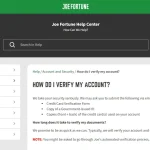
Before financial transactions, online casinos commonly require a Know Your Customer (KYC) assessment. This is an identity and account verification process. It is relevant to withdrawals because a payment request may not be the only step involved in receiving funds: the operator may first need to complete checks on the customer.
That does not establish how long any individual assessment will take, what documents a particular operator will ask for, or whether a Google Pay payout is offered. Those details cannot be inferred from the fact that KYC checks are commonly required. A statement that a withdrawal is instant should therefore be treated carefully if it does not distinguish payment processing from identity review.
You should also distinguish between submitting a payout request and having funds available to use. They are different stages. A claim about one stage does not settle the other, and a general description of a payment method cannot fill in the missing terms. If a service does not clearly explain the payout route and the conditions that apply, an “instant” label leaves important questions unanswered.
CashtoCode Casinos in Australia: What Can Be Verified
Do not mistake a wallet reference for a payout promise
A payment method may be discussed broadly without clarifying whether it applies to incoming payments, outgoing payments, or both. For a withdrawal, the relevant question is specifically whether winnings can be sent to Google Pay—not whether the wallet is known to consumers or appears in a general list of payment options. A deposit-related reference cannot be treated as proof of withdrawal support.
This is why search phrases promising an instant Google Pay casino withdrawal should not be taken at face value. The wording may combine three separate ideas: a casino, a wallet, and speed. Unless the terms clearly connect all three for withdrawals, the wording does not establish that the service can send funds to the wallet or when the funds would arrive. Avoid turning a broad payment claim into a specific expectation about getting money out.
Before relying on any payout statement, look for wording that deals expressly with withdrawals and identifies Google Pay as the destination. Check whether the conditions explain when a request can be made and whether verification is required. If those points are unclear, do not assume that the wallet can receive the money or that “instant” refers to the full process. This is a way to interpret a claim, not an assurance that an offshore service is available or suitable.
There is also a significant consumer-protection limitation in Australia: Australian consumer law does not protect players who use offshore casinos. That makes confident-sounding payout language especially poor grounds for relying on a promised outcome.
The practical answer is narrow. Google Pay withdrawal availability and payout timing cannot be assumed from general statements about the wallet, an advertised offer, or the word “instant”. KYC checks are commonly part of online casino financial transactions, but that fact does not supply a processing time or establish a Google Pay payout route. If the terms do not clearly state both, there is no basis for expecting winnings to reach Google Pay immediately—or at all.
What are the deposit and withdrawal limits at the best Amex casinos?
Limits are set by each casino and can vary. Check the casino’s cashier or payment terms for its Amex deposit and withdrawal limits.
Which online casinos accept American Express for deposits?
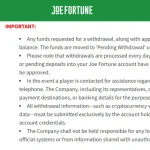
Jackpot City Casino, Spin Palace, Ruby Fortune, Ignition Casino, Joe Fortune and PlayAmo are listed as accepting Amex deposits for Australian players.
Are there any fees associated with using American Express at online casinos?
Amex deposits are typically free, but a casino may charge a surcharge, and withdrawals may carry a fee. Amex cards also incur a 3% currency conversion fee.
Are there any limits on how much I can deposit or withdraw using American Express?
Yes. Each casino sets its own Amex deposit and withdrawal limits, so check its cashier or payment terms. Amex limits are usually higher than those for Mastercard and Visa.
Why does my Amex deposit get declined at some casinos but not others?
Amex may block payments to a particular website, or your Australian bank may block gambling-related transactions on your card.
Can you use an American Express gift card at an online casino?
Yes, at casinos that accept American Express, but gift cards can be used for deposits only.
What should I do if my American Express deposit is declined?
Check with American Express or your bank, as either may be blocking the gambling transaction. You can also use another payment method accepted by the casino.
Payments

Anonymous Crypto Casino in Australia: Bitcoin Guide
A practical look at wallet transfers, privacy limits, bonus terms, game rules and the checks...

Aristocrat Online Pokies Australia: Bitcoin Explained
An overview of Bitcoin pokies, Australian legal limits, payment considerations and what can—and cannot—be verified...

Aussie Crypto Casinos: How Online Play and Crypto Work
Crypto changes how funds move between a casino account and a wallet, while games and...

New Australian Online Pokies: Claims and Risks
The guide separates release claims from unfamiliar games and explains the legal, payment and verification...

Online Casino Payment Methods for Australians
Payment options can work differently for deposits and withdrawals, while availability alone says nothing about...

Best Paying Online Pokies in Australia: What to Know
The guide separates general payout claims from individual results and outlines payment trade-offs, verification, bonus...

Bitcoin Pokies in Australia: Payments and Protections
Bitcoin is a funding method, while each game's credits and play rules remain separate from...

Amex Casino Sites in Australia: Deposit Details
Amex availability can vary by operator and account, while deposit access does not guarantee the...

BPAY casino sites in Australia: what to verify
BPAY references can describe different arrangements, so availability and payment conditions need to be checked...

Casino Sites That Accept Amex in Australia
Amex availability varies by casino, and a card listing is not a guarantee that deposits...

Australian Casino Sites That Accept EcoPayz: What’s Verified
EcoPayz mentions, timing claims and Australian casino labels need operator-specific confirmation to establish whether payment...

Osko Casino Sites in Australia: Payment Claims Explained
Osko availability, withdrawal timing and casino legality are separate issues; payment details alone cannot verify...

Paysafecard Casino Sites in Australia: What to Check
Paysafecard support, account eligibility and withdrawal routes are distinct questions, and a search phrase alone...
Skrill Casino Sites in Australia: Legal and Payment Facts
Australian rules, identity checks, withdrawals and payment comparisons are examined without treating unverified Skrill claims...

Casino Sites That Accept Trustly in Australia: What to Check
Australian law, payment acceptance and withdrawal timing are separate issues, so Trustly claims need careful...

Casinos That Accept Apple Pay in Australia: What to Know
Australian law, deposits and withdrawals are separate issues from whether an online casino actually accepts...

Bitcoin Casinos in Australia: What to Check
Bitcoin casino access depends on operator payment rules, blockchain confirmations, bonus terms and the legal...

Casinos That Accept Bitcoin Cash (BCH) in Australia
A practical guide to BCH deposits, offshore casino checks, bonus terms, gameplay and withdrawal procedures....

CashtoCode Casinos in Australia: What Can Be Verified
The guide distinguishes operator-specific support from general payment listings and explains why availability cannot be...

Ethereum Casinos in Australia: What to Verify
An ETH payment option describes a narrow part of casino operations and does not establish...

Casinos That Accept Litecoin in Australia: What Claims Mean
Casino payment claims can leave coin support, withdrawal methods and transaction conditions unconfirmed. What Crypto...

Casinos That Accept Mastercard in Australia
The article distinguishes operator legality from card acceptance and explains why deposit methods do not...

Casinos That Accept MiFinity in Australia: A Guide
A practical look at offshore casino payment claims, verification limits, withdrawal conditions and the Australian...
Casinos That Accept Neosurf in Australia: What’s Verified
A current operator statement is needed to confirm Neosurf acceptance; search listings and payment logos...

Casinos That Accept Neteller in Australia: What to Know
The guide separates Australian law from payment availability and examines what can—and cannot—be verified about...

PayID Casinos in Australia: Legal and Payment Checks
The Interactive Gambling Act 2001 prohibits operators from offering real-money online casino games to people...

Casinos That Accept PayPal in Australia: What to Check
A reference to PayPal alongside pokies describes a search, not proof that a particular site...

Casinos That Accept POLi in Australia: What to Verify
A careful look at what claims can establish about POLi deposits, withdrawals, and casino payment...
Tether USDT casinos in Australia: what to verify
Australian payment habits provide context, but they do not establish whether a gambling service accepts...

Casinos That Accept Visa in Australia: What to Know
Visa acceptance can vary by casino and card issuer, so a general comparison does not...

Dragon Link Online Pokies in Australia: What to Know
Understand what a Dragon Link label can—and cannot—confirm, alongside the payment, withdrawal and consumer-protection issues...

Instant Bank Transfer Casinos in Australia Explained
Bank-transfer options can apply to deposits without supporting withdrawals, and payment labels do not change...

New PayID Pokies in Australia: Payments Explained
PayID uses a phone number or email as a payment identifier, while deposits, withdrawals and...

Online pokies with PayID in Australia: payment guide
PayID is an identifier linked to a bank account, while the NPP carries transfers between...

Pay by Phone Casinos in Australia: PayID Explained
PayID uses a banking app and the New Payments Platform, so a mobile-number identifier does...

Real Cash Online Pokies in Australia: Bitcoin Guide
Bitcoin play may involve game credits rather than a withdrawable Bitcoin balance, while account checks...

Safe Online Pokies in Australia: What to Check
A practical way to assess offshore operators, payment uncertainties, withdrawal checks and the limits of...

Solana Casino Comparison in Australia: Payments and Risks
Using SOL does not change the rules for offshore casino services, and bonus terms, withdrawal...