Tether USDT casinos in Australia: what to verify
 Available in AU
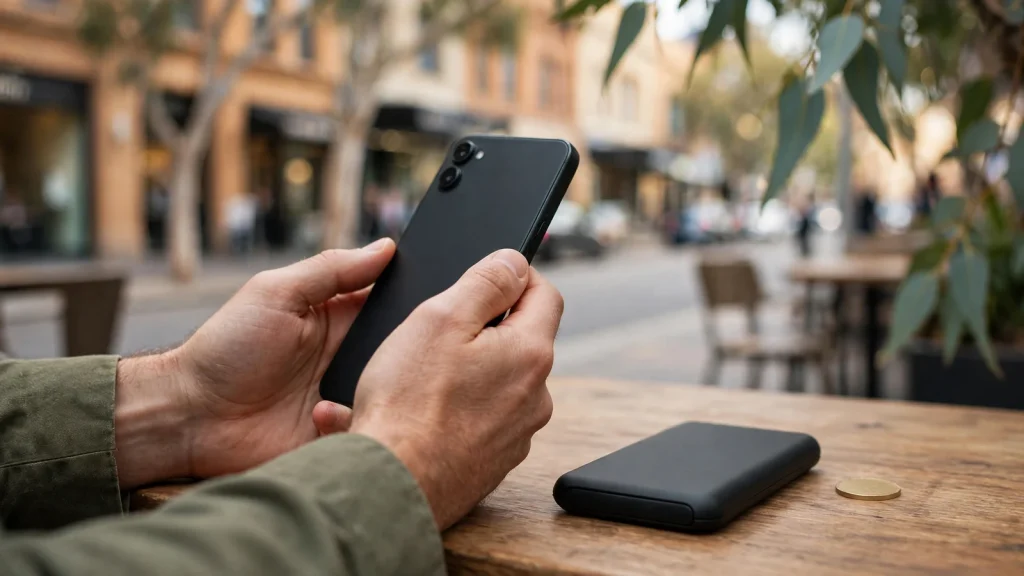
Table of Contents
- How Australian payment habits frame a crypto-casino search
- What a “best” USDT casino claim would need to prove
- Online claims and the limits of what can be verified
- Bonuses, slots and the Australian advertising boundary
- Casino games and the legal context for Australian residents
- USDT, crypto transfers and what the available evidence says
- Checking an acceptance claim without treating it as an endorsement
- Playing with crypto: deposits are not proof of USDT support
- Live-dealer games and the same offshore-service restriction
- Deposits, withdrawals and the limits of crypto comparisons
Australian payment habits provide context, but they do not establish whether a gambling service accepts Tether or supports crypto transfers.
How Australian payment habits frame a crypto-casino search
In Australia, paying by card or phone is an ordinary part of daily life. Contactless credit and debit cards are accepted almost everywhere, and mobile wallets such as Google Pay and Apple Pay are similarly familiar. That helps explain why a search for a gambling service using Tether can sit alongside expectations formed by routine purchases: people are used to choosing a payment method they already know and moving on.
Those habits describe the wider payment environment, not what a particular gambling operator accepts. A card’s broad use in shops does not establish that it can be used for an online gambling transaction. Nor does familiarity with a mobile wallet tell you whether a specific service supports it. The difference matters: everyday acceptance is not evidence of acceptance in a particular setting.
Many Australians also move between cards, mobile wallets and services connected to bank accounts, including PayPal. These options can feel like variations on a familiar theme: selecting a method, confirming a payment and seeing the transaction reflected in an account. A cryptocurrency search starts from a different premise. Tether is a digital asset, not another name for a card or a bank-linked wallet, so the fact that conventional payment tools are common does not answer questions about Tether.
A person looking into an online service that mentions Tether may therefore be comparing unlike things. A card payment is tied to a card issuer and its rules; a mobile wallet is a way to use supported payment credentials; a bank-linked service connects a payment to an account or provider. A digital asset involves a different kind of payment arrangement. Recognising those broad distinctions can help you avoid treating every option shown in a payment menu as interchangeable.
The familiar Australian pattern is also one of choice. People may use a card for one transaction, a phone wallet for another and a bank-linked service elsewhere. That flexibility can make a new payment label seem like just one more option. But a label alone tells you little about who processes a transaction, what conditions apply or whether the method is available for the service you have in mind. Familiarity with switching methods is not the same as evidence that a particular method works in a particular context.
Casinos That Accept Mastercard in Australia
There is an important boundary here. The widespread use of contactless cards and mobile wallets refers to ordinary payment acceptance across Australia. It should not be read as an invitation to use credit cards for online gambling, or as confirmation that gambling services can lawfully offer card payments. Australia’s restrictions on online casino services mean that ordinary payment habits cannot be used to imply that such a service is available to residents. Australian consumer law does not protect people who use offshore casinos, another distinction that can be easy to miss when a payment option looks familiar.
This context is useful when you encounter phrases describing an online casino as “mobile” or presenting a payment method as convenient. A phone may be the device used to access a service; a mobile wallet may be a payment tool used for other kinds of transactions. Neither fact establishes that Tether is accepted, or that an online casino is operating lawfully for someone in Australia. The device, the payment method and the legal status of the service are separate questions.
Legal Risk
Australian consumer law does not protect people who use offshore casinos, and ordinary payment habits do not imply that such services are lawfully available to residents.
The same care applies to bank-linked services. PayPal is familiar to many Australian consumers, but familiarity with a service does not mean it can be used for every kind of transaction. A payment provider can have its own rules, and a merchant’s payment arrangements can differ from those of an ordinary retailer. The name of a known provider, if encountered in a description, is not a substitute for checking what the transaction actually involves.
For you, the practical starting point is to keep these categories apart. Cards, phone wallets and bank-linked services are established parts of Australian daily payments. Tether belongs to a different payment category, and its presence in a description does not make it equivalent to those familiar options. Most importantly, the general popularity of a payment method says nothing by itself about the legality or availability of an online casino service. A search involving Tether is not answered by the fact that Australians are comfortable paying in several ways.
What a “best” USDT casino claim would need to prove
If you’re looking for a casino that accepts Tether USDT in Australia, use this list as a starting point for checking the available operator details. Pay particular attention to the stated licence and any deposit or payout information before deciding whether an option suits you.
1. Playfina Casino
License: Curacao eGaming (Hollycorn N.V., since 2017) · Min. deposit: A$20-30 (depends on the offer) Playfina is listed with a Curacao eGaming licence held by Hollycorn N.V., which has held it since 2017. Its minimum deposit is A$20–30, depending on the offer.
2. Roby Casino
License: Curacao eGaming (Roby Games Ltd) Roby Casino is listed with a Curacao eGaming licence held by Roby Games Ltd. The available details for you to assess here are limited to its licensing.
3. Wild Tokyo
License: Curacao · Payout speed: crypto 30-60 minutes, fiat 1-5 days · Min. deposit: A$10 Wild Tokyo is listed with a Curacao licence and a minimum deposit of A$10. Its stated payout times are 30–60 minutes for crypto and 1–5 days for fiat.
4. SpinsUp
License: Curacao Gaming Control Board OGL/2023/174/0082 (Dama N.V.) SpinsUp is listed with Curacao Gaming Control Board licence OGL/2023/174/0082, held by Dama N.V. You can use that licensing detail as the main point of reference here.
5. Thor Casino
License: Curacao – Antillephone N.V. (Versus Odds B.V.) · Min. deposit: EUR 20 Thor Casino is listed with a Curacao licence held by Antillephone N.V. (Versus Odds B.V.). Its stated minimum deposit is EUR 20.
6. GoldenCrown
License: Curacao Gaming Control Board OGL/2023/176/0095 (Hollycorn N.V.) GoldenCrown is listed with Curacao Gaming Control Board licence OGL/2023/176/0095, held by Hollycorn N.V. The available information for you to consider here is its licensing.
7. LevelUp Casino
License: Curacao eGaming OGL/2023/174/0082 (Dama N.V.) · Min. deposit: A$15 LevelUp Casino is listed with Curacao eGaming licence OGL/2023/174/0082, held by Dama N.V. Its stated minimum deposit is A$15.
8. JustCasino
License: Curacao Gaming Control Board JustCasino is listed as holding a Curacao Gaming Control Board licence. No further operator details are available here, so licensing is the main point you can assess from this entry.
9. Lucky Dreams
License: Curacao · Min. deposit: A$20 (POLi) Lucky Dreams is listed with a Curacao licence and a minimum deposit of A$20 via POLi. These are the available details for you to weigh.
10. DragonSlots Casino
License: Curacao Gaming Authority (Jumpman Gaming Ltd) DragonSlots Casino is listed with a Curacao Gaming Authority licence held by Jumpman Gaming Ltd. The available information for you to assess here is limited to its licensing.
“Best” is a conclusion, not a payment feature. A site can put the word beside Tether, but that label does not establish that the operator accepts USDT, let alone that it is a better choice than another operator. A defensible ranking would need clear criteria and evidence for each one. Without those, a list of supposedly leading options would give a confident shape to an uncertain claim.
The first question is whether an operator supports Tether at all. That requires more than a general reference to cryptocurrency: the payment method needs to be identified as USDT, and the relevant route for making a transfer needs to be clear. A statement that a service accepts “crypto” does not, by itself, confirm support for a particular token. Nor does a general description of a cashier prove that the option is available to Australian users.
A ranking would also need to explain what “best” means. Is the comparison about confirmed acceptance, ease of understanding the payment terms, or some other defined measure? Those are different questions, and combining them without a method can make a personal preference look like an objective result. If the criteria are not stated, readers cannot tell whether a high position reflects evidence, editorial judgement or merely prominent wording.
Casinos That Accept Neteller in Australia: What to Know
Evidence should be specific enough to check. A payment claim is more meaningful when it comes from an operator’s current terms or cashier information and identifies the token clearly. A broad promotional line, a third-party description or a mention of crypto in general is less conclusive. Even a statement that appears precise may not settle whether it applies to the reader’s location or remains current. Payment options and terms can change, so a ranking needs a clear basis and a date for its assessment.
The distinction matters because “accepts USDT” and “best USDT option” are not interchangeable claims. The first is a factual statement about a payment method. It can be tested against operator information. The second adds a judgement that requires comparison across more than one operator and a reasoned account of the criteria. Proving one site supports a payment method would not prove that it outranks others.
A careful assessment would also distinguish between an advertised payment option and a process a customer can actually complete. Online casinos commonly ask customers to undergo identity checks before they can carry out financial transactions. That means a payment description is not a complete account of the customer’s experience: the operator’s verification requirements are a separate part of the process. Any comparison that treats a payment logo as the whole story would leave out a material condition.
The same care applies to labels such as “latest” or “top”. Recency is not a quality measure, and a recently updated page does not automatically show that its underlying payment claims have been checked. A ranking should make clear what was reviewed and how the conclusion follows from it. Otherwise, the reader is left with a polished label but no way to judge what it rests on.
Do
- Identify USDT specifically in the payment terms
- Check for a clear transfer route
- Use stated criteria for rankings
Don’t
- Assume “crypto” implies USDT support
- Rely on labels like “best” without evidence
- Treat payment logos as a complete account of experience
Searches combining Tether with bonuses or games do not make a payment claim stronger. Those subjects involve different assertions, and a list that bundles them together can blur what has actually been established. A payment method, a promotional statement and a description of games are not evidence for one another. A ranking should not gain credibility simply by placing several attractive terms in the same heading.
For Australian readers, the wording should be especially careful not to turn a promotional label into an implied recommendation. A “best” list can sound like an endorsement even when it offers no transparent comparison. The responsible standard is narrower: state what the evidence demonstrates, explain the limits of that demonstration, and avoid presenting an untested claim as a settled result. If operator-specific proof and consistent comparison criteria are not available, a ranking cannot be substantiated. The honest alternative is not to dress uncertainty up as a league table.
Online claims and the limits of what can be verified
A page describing an online casino may use broad terms such as “crypto payments” or “digital currency” without establishing that Tether (USDT) is accepted. A general statement about cryptocurrency is not the same as a payment option shown for a particular operator. Nor does a site’s use of familiar account procedures confirm what currencies its cashier supports.
One such procedure is identity checking. Before handling financial transactions, online casinos commonly ask customers to complete a Know Your Customer assessment: checks intended to establish who the account holder is. That tells you something about account verification, not which payment methods are available. A completed identity check cannot turn an unspecified crypto option into evidence of USDT support.
Casino Sites That Accept Trustly in Australia: What to Check
A useful distinction is between a claim and a detail that can be checked against the service itself. “Accepts crypto” leaves important questions open: does the statement refer to USDT, or to a different cryptocurrency? Does it apply to Australian customers? Is the method offered for deposits, withdrawals, or both? A page that does not answer those points has not established the specific payment arrangement implied by a Tether claim.
The same applies to language about a “best” site. A label is an opinion, not proof of a payment feature. Repeating a claim across several pages does not make it more reliable if those pages do not identify what the operator actually supports. Even a precise-sounding description may be out of date or may refer to another location, account condition or payment route. The wording alone cannot resolve those uncertainties.
A no-deposit offer is also a separate claim, not evidence that USDT is accepted. A promotion may describe an incentive without explaining the cashier’s supported currencies; a payment page may list a currency without confirming any offer. Treating one as proof of the other joins two separate questions. Details about an offer should be assessed on their own terms rather than inferred from a general reference to cryptocurrency.
If you encounter a USDT claim, look for wording that identifies the token and the circumstances in which it is available, rather than relying on a generic crypto label. The distinction matters because a payment method can be described broadly while the specific option a reader has in mind is not established. A page that gives no token-level detail leaves that central point unanswered; confidence of tone is no substitute for clear terms.
A general statement about cryptocurrency is not the same as a confirmed payment option for a particular operator, nor does it confirm the specific token or location applicability.
There is also a larger consumer issue behind these claims. Australian consumer law does not protect people who use offshore casinos. A polished payment description should not be mistaken for a safeguard or endorsement, and account checks do not change that position. Reading a claim carefully means separating what it actually says from what a reader might reasonably assume it promises.
For readers in Australia, the practical takeaway is modest: generic references to online casino procedures, identity checks or cryptocurrency cannot establish that a particular site accepts Tether. Keep the payment claim narrow. If the wording does not clearly connect USDT to the service and the relevant customer, it should not be treated as confirmation.
Bonuses, slots and the Australian advertising boundary
A deposit bonus, a welcome offer or a no-deposit promotion may look like a payment detail, but each is also an inducement: a benefit intended to encourage gambling. That distinction matters in Australia. Rules restricting gambling advertising also limit how inducements can be promoted, so describing an offer as a perk does not put it outside the advertising boundary.
The Interactive Gambling Act 2001 bars operators from providing online casino games to people in Australia. It does not expressly make a player’s use of an offshore site a criminal offence. That difference does not make advertising those services permissible. Offshore online casinos cannot be promoted to Australian audiences, and commercial wording cannot turn an advertisement into neutral consumer information.
Casinos That Accept Neosurf in Australia: What’s Verified
Pokies have an additional, clear boundary: slot games must not be advertised in any form. That restriction is relevant whether the material is framed around a bonus, a deposit, a free-play offer or a particular game. A page encouraging readers to seek out slot promotions can still function as promotion even if it avoids a direct instruction to sign up. The wording and purpose matter, not merely whether it uses the word “advertisement”.
Timing is another part of the compliance picture. Gambling advertising restrictions apply especially between 5:00 am and 8:30 pm, and inducement promotions require care within those limits. But a time-based rule should not be read as permission to advertise casino services or pokies outside that window: the separate restrictions on promoting offshore online casinos and advertising slots remain relevant.
For a reader, this means that a page describing a Tether-funded slot bonus is not simply explaining a payment option. If it invites Australians to use an offshore casino, highlights an inducement or promotes slot play, it raises a different issue from whether a payment method works. A disclaimer or a label such as “review” does not by itself remove the promotional character of the material.
This is why bonus language deserves scrutiny. “Welcome”, “free” and “no deposit” describe the appeal of an inducement, not evidence that it is lawful to advertise to Australians or that an operator may provide the underlying casino service here. Treat claims of effortless access or a special deal with particular caution; the phrasing can make a promotion sound like useful information without changing what it encourages.
The advertising boundary is therefore not a technicality about how a bonus is paid. It concerns whether Australian audiences are being invited toward prohibited online casino services or slot play. A deposit label, a cryptocurrency reference and a promotional disclaimer do not change that basic distinction.
Attention: Slot games must not be advertised in any form in Australia, regardless of whether the material is framed as a bonus or a particular game.
Casino games and the legal context for Australian residents
The legal distinction is between the operator’s conduct and the player’s position. Under the Interactive Gambling Act 2001, an operator must not provide real-money online casino games to people located in Australia. That covers casino-style play offered over the internet, regardless of whether a customer is looking for table games or another form of casino entertainment.
The Act does not explicitly make an Australian player’s use of an offshore casino a criminal offence. That is not the same as saying the service is lawful in Australia: the prohibition is directed at providers, and a business operating from overseas is not exempt simply because it has no Australian office. The Australian Communications and Media Authority (ACMA) oversees enforcement of the Act.
Payment method does not change that legal distinction. Paying with Tether, another cryptocurrency, a card or a bank-linked service would not turn a prohibited service into a permitted one. Nor does describing a site as an anonymous Tether casino settle whether its service is lawful. The relevant issue is the online gambling service being offered to people in Australia, not the label attached to its cashier or the token used to transfer funds.
This matters when a search for casino games involving Tether leads to an offshore operator. A payment page can describe a deposit route, but it cannot establish that providing the underlying real-money casino service to Australians is allowed. Likewise, a game catalogue does not alter the operator’s obligations under Australian law. The convenience or technical design of a payment method is separate from the legal status of the gambling service.
Casinos That Accept Litecoin in Australia: What Claims Mean
There is also a practical consequence for consumers. Australian consumer law does not protect players who use offshore casinos. If a dispute arises over an account, a payment or access to funds, you should not assume that the protections available for domestic consumer transactions will apply. The absence of an explicit player offence is therefore not a consumer safeguard, and it is not an endorsement of offshore play.
For readers considering whether to play casino games with Tether, these points should be kept separate: the law restricts operators from offering real-money online casino games to people in Australia; the Act does not explicitly criminalise an individual for using an offshore site; and consumer protections may not be available when dealing with that site. None of those statements verifies a particular platform or payment claim.
A site’s own terms may describe where it says it accepts customers, but that wording does not displace Australian law. If an operator presents a casino service to Australian residents, the relevant question is not whether its games load or whether a Tether transfer can be made. It is whether the operator is permitted to provide that service to people physically in Australia.
USDT, crypto transfers and what the available evidence says
Bitcoin and Ethereum are associated with deposits and withdrawals that can be processed instantly, with limited or no fees. That describes those cryptocurrencies in general; it does not establish that a gambling site supports either one, or that every transfer will be instant or fee-free. A cashier’s payment options and transaction terms depend on the service involved.
TRC20 and Network Standards
TRC20 refers to a token standard on the Tron network. A payment route must match what the receiving service supports, as a general reference to cryptocurrency does not confirm support for specific networks like TRC20.
Tether, commonly referred to by its ticker USDT, is a different cryptocurrency. TRC20 refers to a token standard on the Tron network. The distinction matters because a token and a transfer network are not interchangeable labels: a payment route must match what the receiving service supports. A general statement about cryptocurrency payments cannot confirm that a cashier accepts USDT, supports TRC20 transfers, or can return funds through the same route.
Even where a site displays a crypto option, the label alone would not settle the practical details. The token, network, deposit process, withdrawal process and applicable fees are separate points. A reader considering a payment would need clear terms identifying each of these; otherwise, a general reference to “crypto” leaves important questions unanswered. Do not assume that support for Bitcoin or Ethereum extends to Tether, or that support for one USDT network implies support for another.
There is also a more fundamental Australian constraint. Under the Interactive Gambling Act 2001, it is illegal for operators to provide real-money online casino games to people physically located in Australia. The Australian Communications and Media Authority enforces the Act. A cryptocurrency payment method does not change the legal status of the gambling service, and a payment option should not be read as evidence that the service may lawfully be offered to Australian residents.
Nor does using crypto remove the consumer risk. Australian consumer law does not protect players who use offshore casinos. That matters if a transfer is delayed, a withdrawal is disputed or the service’s terms do not match what you expected. Crypto transactions may be difficult to reverse, so the possibility of a quick transfer is not the same as a dependable remedy if something goes wrong.
PayID Casinos in Australia: Legal and Payment Checks
For Australian readers, the defensible distinction is narrow: Bitcoin and Ethereum are described as cryptocurrencies that can offer fast transactions with limited or no fees. That general description says nothing specific about a Tether real-money casino, USDT acceptance or TRC20 support. Treating those claims as equivalent would turn a broad comparison into a payment promise it cannot support.
Checking an acceptance claim without treating it as an endorsement
A statement that an online casino takes Tether (USDT) is a claim about a payment option, not proof that the service is lawful to offer in Australia or safe to use. It also does not, by itself, establish that the option is available to every customer, or that the operator will handle a payment or withdrawal as a reader expects. Treat the wording as something to assess, not as a recommendation.
If you encounter such a claim, look for a clear explanation of what the operator says it accepts and whether the information is presented as a current payment option rather than a general reference to cryptocurrency. Read the relevant terms alongside the claim. Marketing language can be broad; the practical conditions matter. A payment label should not be mistaken for an assurance about the operator’s conduct, the outcome of a transaction, or the protections available if something goes wrong.
The legal setting is an important part of that assessment. Under the Interactive Gambling Act 2001, offering online casino gambling to people in Australia is unlawful for operators. The Act does not expressly make an individual player’s use of an offshore site a criminal offence. That distinction does not turn an offshore service into a locally authorised one, or make using it a risk-free choice.
Payment Claims
An "accepts USDT" claim describes a payment method but does not verify the operator’s legal status or the availability of consumer protections in Australia.
There is also a consumer-protection consequence: Australian consumer law does not protect players who use offshore casinos. If a dispute arises over an account or funds, you may not have the protections or practical avenues of redress you would expect from an Australian consumer service. A payment claim, even if stated plainly, cannot remove that disadvantage.
This is why “accepts USDT” should be read narrowly. It says something about a claimed payment method; it says nothing conclusive about the operator’s legal position in Australia, the reliability of its service, or your ability to resolve a dispute. A polished cashier page is not a substitute for those protections. Nor should a list of payment options be read as an endorsement of the gambling service behind it.
For Australian readers, the sensible distinction is between understanding what a claim says and treating it as a reason to use the site. The first is an assessment of wording and conditions. The second would require confidence and protections that a payment label cannot provide.
Playing with crypto: deposits are not proof of USDT support
A general claim that a gambling service accepts cryptocurrency does not tell you which assets its cashier supports. Bitcoin and Ethereum are distinct payment options; Tether (USDT) is another. Acceptance of one does not establish acceptance of the others, and the word “crypto” alone is too broad to settle the question.
The same distinction applies to the transfer route. A token may be available on more than one blockchain network, and a payment screen that names USDT would still need to identify which network it accepts. Selecting the wrong route can mean a transfer is not credited as expected. A broad statement about cryptocurrency payments does not confirm support for USDT on any particular network.
There is a useful general comparison, but it has limits: Bitcoin and Ethereum can offer fast deposits and withdrawals with little or no fee. That does not establish the speed or cost of a USDT transfer. Nor does it show whether a particular gambling service accepts Tether, whether it accepts a specific network, or whether its withdrawal process matches its deposit process. Those details cannot safely be inferred from a general description of crypto payments.
For you, the practical distinction is between a payment category and a confirmed option. “Cryptocurrency accepted” describes a category. A token and network named in the cashier would be more specific, but even that would not by itself establish the applicable terms or how a transaction is handled. Claims about anonymous access or no identity checks are also separate from the payment method: using a crypto asset does not prove that an account can be used without verification.
There is a more fundamental Australian context. The Interactive Gambling Act 2001 prohibits operators from providing real-money online casino-style services to people in Australia. A crypto payment method does not change that restriction or make an offshore service locally authorised. The law does not explicitly criminalise an individual for using an offshore site, but Australian consumer law does not protect players who do so.
So, speed and fee statements about Bitcoin or Ethereum should not be treated as evidence about Tether. They describe those assets in general, not a confirmed USDT payment route for a gambling service.
Does accepting cryptocurrency prove USDT support?
No, a general claim that a service accepts cryptocurrency is too broad to establish the acceptance of a specific asset like Tether (USDT).
Does support for Bitcoin or Ethereum imply USDT support?
No, Bitcoin and Ethereum are distinct payment options, and acceptance of one does not establish the acceptance of others.
Does using crypto remove legal risks in Australia?
No, the Interactive Gambling Act 2001 prohibits operators from providing real-money online casino services to people in Australia regardless of the payment method used.
Live-dealer games and the same offshore-service restriction
A live-dealer table may look different from a conventional online casino game because a human dealer appears on camera and the action is streamed. That format does not change the legal category of the service. If you are physically in Australia, a real-money live-dealer casino game is still an online casino game offered to a person in Australia.
The Interactive Gambling Act 2001 makes it illegal for operators to provide real-money online casino games to people located in Australia. The Australian Communications and Media Authority (ACMA) oversees enforcement of that law. A site’s use of a foreign company, a live video feed or cryptocurrency does not, by itself, remove the restriction on providing the service to Australian residents.
That distinction matters when you encounter claims about live-dealer tables accepting Tether or another crypto payment. A payment label describes a proposed way to transfer funds; it does not establish that the underlying gambling service may lawfully be offered in Australia. Nor does a live dealer make an offshore casino a locally authorised service. Avoid treating technical availability or a payment option as evidence of legal status or consumer protection.
The law’s prohibition is directed at operators. It does not explicitly make an Australian player’s use of an offshore site a criminal offence. That is not the same as saying the arrangement is protected or risk-free: Australian consumer law does not protect players who use offshore casinos. If a dispute arises over an account, payment or withdrawal, you should not assume that ordinary local consumer remedies will be available.
So, if you are considering a live-dealer casino promoted as accepting USDT, separate the claims. One concerns whether a site says it can process a token; another concerns the legality and protections surrounding the gambling service itself. The first cannot answer the second. A polished live stream may make an offshore operation feel close at hand, but presentation does not alter the legal boundary.
Casinos That Accept Visa in Australia: What to Know
Deposits, withdrawals and the limits of crypto comparisons
A deposit and a withdrawal are separate parts of a payment process. A statement about how quickly one can be credited does not establish how quickly a payout will reach you. This distinction matters when assessing claims about Tether (USDT): general information about cryptocurrency transactions cannot confirm that an operator supports USDT withdrawals, or how long they take.
Bitcoin and Ethereum are described as allowing instant deposits and withdrawals, with limited or no fees. That comparison applies to those currencies as a general payment category. It does not demonstrate that the same timing or fee conditions apply to USDT. Nor does it establish support for a particular transfer network, such as TRC20. A casino cashier may treat currencies and networks as separate options, with different rules for incoming and outgoing transfers.
Before relying on a withdrawal claim, look for terms that specifically cover USDT payouts, not just deposits or cryptocurrency payments in general. The relevant details include whether USDT is listed for withdrawals, which network is supported, how the operator describes processing, and whether any fees or account checks apply. A claim of an “instant” payout is not meaningful unless it says what stage is instant: an operator’s approval, the transfer being sent, or the funds becoming available in your wallet. These are not interchangeable.
Do not treat a reference to fast crypto transfers as proof that you can cash out in USDT. A broad comparison with Bitcoin or Ethereum cannot settle the question, and a deposit option alone says nothing about withdrawal availability. If the terms do not clearly distinguish the two, the practical answer remains uncertain.
There is also a significant consumer-protection limit: Australian consumer law does not protect players who use offshore casinos. That makes a vague payout promise more than a wording issue. It can leave you with little recourse if a withdrawal is delayed or disputed. This section is not an endorsement of offshore gambling; it is a reminder that claims about payment speed should not be mistaken for evidence of a reliable or protected service.
What are the deposit and withdrawal limits at the best Amex casinos?
Limits are set by each casino and can vary. Amex limits are usually higher than those for Visa or Mastercard.
Which online casinos accept American Express for deposits?
Jackpot City Casino, Spin Palace, Ruby Fortune, Ignition Casino, Joe Fortune, and PlayAmo are among the operators listed as accepting Amex deposits for Australian players.
Can I withdraw winnings directly to my American Express card?
Some casinos do not allow withdrawals to Amex, and withdrawals generally require that you have previously deposited with Amex. Where permitted, a withdrawal may take up to five days to clear and may incur a fee.
What should I do if my American Express deposit is declined?
Amex or your Australian bank may block gambling-related payments to a particular website. Check with your card issuer and whether the casino accepts Amex deposits.
What are the fees involved with American Express payments?
Amex deposits are typically free, but a casino may charge a 1.5% surcharge, and a 3% currency conversion fee may apply. Withdrawal fees can also apply, depending on the casino.
Are there any fees for depositing with American Express?
Deposits are typically fee-free, although a casino may apply a 1.5% surcharge. A 3% currency conversion fee may also apply.
How can I know if an online casino will accept American Express?
Check the casino’s cashier for American Express as a deposit option; if it is available, select it to make a deposit. Jackpot City Casino, Spin Palace, Ruby Fortune, Ignition Casino, Joe Fortune, and PlayAmo are listed as accepting Amex deposits for Australian players.
Payments

Anonymous Crypto Casino in Australia: Bitcoin Guide
A practical look at wallet transfers, privacy limits, bonus terms, game rules and the checks...

Aristocrat Online Pokies Australia: Bitcoin Explained
An overview of Bitcoin pokies, Australian legal limits, payment considerations and what can—and cannot—be verified...

Aussie Crypto Casinos: How Online Play and Crypto Work
Crypto changes how funds move between a casino account and a wallet, while games and...

New Australian Online Pokies: Claims and Risks
The guide separates release claims from unfamiliar games and explains the legal, payment and verification...

Online Casino Payment Methods for Australians
Payment options can work differently for deposits and withdrawals, while availability alone says nothing about...

Best Paying Online Pokies in Australia: What to Know
The guide separates general payout claims from individual results and outlines payment trade-offs, verification, bonus...

Bitcoin Pokies in Australia: Payments and Protections
Bitcoin is a funding method, while each game's credits and play rules remain separate from...

Amex Casino Sites in Australia: Deposit Details
Amex availability can vary by operator and account, while deposit access does not guarantee the...

BPAY casino sites in Australia: what to verify
BPAY references can describe different arrangements, so availability and payment conditions need to be checked...

Casino Sites That Accept Amex in Australia
Amex availability varies by casino, and a card listing is not a guarantee that deposits...

Australian Casino Sites That Accept EcoPayz: What’s Verified
EcoPayz mentions, timing claims and Australian casino labels need operator-specific confirmation to establish whether payment...

Osko Casino Sites in Australia: Payment Claims Explained
Osko availability, withdrawal timing and casino legality are separate issues; payment details alone cannot verify...

Paysafecard Casino Sites in Australia: What to Check
Paysafecard support, account eligibility and withdrawal routes are distinct questions, and a search phrase alone...

Skrill Casino Sites in Australia: Legal and Payment Facts
Australian rules, identity checks, withdrawals and payment comparisons are examined without treating unverified Skrill claims...

Casino Sites That Accept Trustly in Australia: What to Check
Australian law, payment acceptance and withdrawal timing are separate issues, so Trustly claims need careful...

Casinos That Accept Apple Pay in Australia: What to Know
Australian law, deposits and withdrawals are separate issues from whether an online casino actually accepts...

Bitcoin Casinos in Australia: What to Check
Bitcoin casino access depends on operator payment rules, blockchain confirmations, bonus terms and the legal...

Casinos That Accept Bitcoin Cash (BCH) in Australia
A practical guide to BCH deposits, offshore casino checks, bonus terms, gameplay and withdrawal procedures....

CashtoCode Casinos in Australia: What Can Be Verified
The guide distinguishes operator-specific support from general payment listings and explains why availability cannot be...

Ethereum Casinos in Australia: What to Verify
An ETH payment option describes a narrow part of casino operations and does not establish...

Casinos That Accept Google Pay in Australia: What to Know
Australian law restricts operators from offering real-money online casino services locally, while payment availability and...

Casinos That Accept Litecoin in Australia: What Claims Mean
Casino payment claims can leave coin support, withdrawal methods and transaction conditions unconfirmed. What Crypto...

Casinos That Accept Mastercard in Australia
The article distinguishes operator legality from card acceptance and explains why deposit methods do not...

Casinos That Accept MiFinity in Australia: A Guide
A practical look at offshore casino payment claims, verification limits, withdrawal conditions and the Australian...
Casinos That Accept Neosurf in Australia: What’s Verified
A current operator statement is needed to confirm Neosurf acceptance; search listings and payment logos...

Casinos That Accept Neteller in Australia: What to Know
The guide separates Australian law from payment availability and examines what can—and cannot—be verified about...

PayID Casinos in Australia: Legal and Payment Checks
The Interactive Gambling Act 2001 prohibits operators from offering real-money online casino games to people...

Casinos That Accept PayPal in Australia: What to Check
A reference to PayPal alongside pokies describes a search, not proof that a particular site...

Casinos That Accept POLi in Australia: What to Verify
A careful look at what claims can establish about POLi deposits, withdrawals, and casino payment...

Casinos That Accept Visa in Australia: What to Know
Visa acceptance can vary by casino and card issuer, so a general comparison does not...

Dragon Link Online Pokies in Australia: What to Know
Understand what a Dragon Link label can—and cannot—confirm, alongside the payment, withdrawal and consumer-protection issues...

Instant Bank Transfer Casinos in Australia Explained
Bank-transfer options can apply to deposits without supporting withdrawals, and payment labels do not change...

New PayID Pokies in Australia: Payments Explained
PayID uses a phone number or email as a payment identifier, while deposits, withdrawals and...

Online pokies with PayID in Australia: payment guide
PayID is an identifier linked to a bank account, while the NPP carries transfers between...

Pay by Phone Casinos in Australia: PayID Explained
PayID uses a banking app and the New Payments Platform, so a mobile-number identifier does...

Real Cash Online Pokies in Australia: Bitcoin Guide
Bitcoin play may involve game credits rather than a withdrawable Bitcoin balance, while account checks...

Safe Online Pokies in Australia: What to Check
A practical way to assess offshore operators, payment uncertainties, withdrawal checks and the limits of...

Solana Casino Comparison in Australia: Payments and Risks
Using SOL does not change the rules for offshore casino services, and bonus terms, withdrawal...