Online Casino Payment Methods for Australians
 Available in AU

Table of Contents
- Payment types and the deposit–withdrawal divide
- How casino payments move from deposit to cashout
- PayID and bank payments in the Australian context
- What a payment gateway can—and cannot—tell you
- When a slower bank payment is a fallback
- Vouchers: a spending cap, but not a cashout route
- Provider fees can change the value of a withdrawal
- Fast payments still depend on operator support
- Digital wallets on a phone: check the direction of payment
- Paying on mobile without losing sight of the cashout
Payment options can work differently for deposits and withdrawals, while availability alone says nothing about an operator’s legality in Australia.
Payment types and the deposit–withdrawal divide
Payment labels can make different routes sound interchangeable. They are not. Bank transfers, e-wallets, prepaid vouchers and cryptocurrencies are distinct categories, and a route that appears on a payment page does not, by itself, tell you what can happen when money is paid out. A specialist review describes these categories as options considered by Australian users, but that description is not a recommendation to fund online gambling.
The legal position matters before comparing any online casino payment options. Under the Interactive Gambling Act 2001, it is illegal for an operator to provide real-money online casino games, including pokies, poker and table games, to people in Australia. A payment method being technically available does not make the service lawful. Nor does a foreign licence make an offshore casino compliant with Australian law.
For a general map of payment types, start with the difference between account-based and prepaid methods. A bank transfer moves funds between accounts. An e-wallet is an account with a payment provider that can be used to send or receive money. A prepaid voucher is loaded with a set amount before it is spent. Cryptocurrency, such as Bitcoin, is a digital asset rather than a bank deposit or an e-wallet balance. These labels describe how a payment is structured; they do not establish that a particular operator accepts it or that it can be used for both directions of a transaction.
Choosing a casino payment method means checking practical details such as deposit minimums and withdrawal speed, as well as the licensing information available. Use these notes to see which payment-related facts are stated for each option.
1. Playfina Casino
License: Curacao eGaming (Hollycorn N.V., since 2017) · Min. deposit: A$20-30 (depends on the offer) Playfina Casino is licensed by Curacao eGaming through Hollycorn N.V., with that licensing arrangement stated as dating from 2017. Its minimum deposit is A$20–30, depending on the offer.
2. Roby Casino
License: Curacao eGaming (Roby Games Ltd) Roby Casino is licensed by Curacao eGaming through Roby Games Ltd. That licensing detail is the available reference point when you assess its payment options.
3. Wild Tokyo
License: Curacao · Payout speed: crypto 30-60 minutes, fiat 1-5 days · Min. deposit: A$10 Wild Tokyo lists a A$10 minimum deposit and Curacao licensing. Its stated payout times are 30–60 minutes for crypto and 1–5 days for fiat.
4. SpinsUp
License: Curacao Gaming Control Board OGL/2023/174/0082 (Dama N.V.) SpinsUp is licensed by the Curacao Gaming Control Board under OGL/2023/174/0082, with Dama N.V. named as the licensee. This licensing information is the available point of reference for your review.
5. Thor Casino
License: Curacao – Antillephone N.V. (Versus Odds B.V.) · Min. deposit: EUR 20 Thor Casino is licensed in Curacao through Antillephone N.V. (Versus Odds B.V.). Its stated minimum deposit is EUR 20.
6. GoldenCrown
License: Curacao Gaming Control Board OGL/2023/176/0095 (Hollycorn N.V.) GoldenCrown is licensed by the Curacao Gaming Control Board under OGL/2023/176/0095, with Hollycorn N.V. named as the licensee. You can use this licensing detail as a reference when considering its payment options.
7. LevelUp Casino
License: Curacao eGaming OGL/2023/174/0082 (Dama N.V.) · Min. deposit: A$15 LevelUp Casino is licensed by Curacao eGaming under OGL/2023/174/0082, with Dama N.V. named as the licensee. Its stated minimum deposit is A$15.
8. JustCasino
License: Curacao Gaming Control Board JustCasino is licensed by the Curacao Gaming Control Board. No further payment-specific details are provided here, so use the license information as your reference point.
9. Lucky Dreams
License: Curacao · Min. deposit: A$20 (POLi) Lucky Dreams has a A$20 minimum deposit when using POLi and is licensed in Curacao. The stated minimum gives you a specific detail to check when considering this payment method.
10. DragonSlots Casino
License: Curacao Gaming Authority (Jumpman Gaming Ltd) DragonSlots Casino is licensed by the Curacao Gaming Authority, with Jumpman Gaming Ltd named in the licensing information. No deposit minimum or payout timing is specified here.
That last distinction is easy to miss. A specialist review notes that casino payment methods can differ between deposits and withdrawals. A deposit is money sent into an account; a withdrawal is money requested out of it. An operator may offer one route for funding but not provide that same route for cashouts. A payment page that displays a logo is therefore not enough to establish that the method works in both directions. The cashout rules need to be read separately, before any payment is made.
There are practical reasons for the divide. A payment provider may permit a merchant to collect funds but not send them back through the same channel. A prepaid voucher, for instance, represents an amount loaded for spending; it is not a bank account to which winnings can be transferred. A provider may also require withdrawals to go through a different payment route. The result is that the method chosen at the start can affect what options remain later, even though the deposit itself went through.
This is why a broad list of casino payment solutions is less useful than checking the direction each one supports. Ask whether the route is offered for deposits, for withdrawals, or for both, and whether the name on the payment account must match the account holder’s details. Do not infer the answer from a general payment-method list or from the fact that a transaction can be made.
Payment Methods & Crypto for Australian Casinos
Credit cards and digital currency should not be treated as acceptable deposit choices for online wagering in Australia. Bitcoin may appear in discussions of online casino payment methods, but that does not make cryptocurrency deposits appropriate. In addition, blockchain transfers cannot be reversed through a card-style chargeback. An irreversible payment deserves particular caution where there is no reliable local consumer protection for an offshore casino balance.
Prepaid methods, e-wallets and bank transfers each have different structures, but none resolves the legal issue or guarantees a cashout route. A phone-based payment option is still just a way to send funds; the device used does not establish withdrawal support. For anyone assessing an online casino payment method, the essential distinction is not simply which logos are shown, but whether the service is lawful and what the payment route actually permits.
How casino payments move from deposit to cashout
A payment into an account and a payment out of it are separate stages, not opposite ends of one instant transaction. A deposit may be recorded before play begins, while a withdrawal request can require the operator to review the account, approve the request and send the funds through a payout route. Each stage has its own possible delay. A payment method that appears on a deposit screen therefore tells you little by itself about how, or when, money could be returned.
Attention: A payment method displayed on a deposit screen does not guarantee that the same route is available or functional for withdrawals.
The sequence matters. First, a payment provider or bank handles the incoming transaction. The operator then credits the account, subject to its own processing. For a withdrawal, the direction reverses: the operator must process the request before a bank or other provider can deliver funds. The operator’s approval time and the provider’s transfer time are distinct. A delay at either point can keep the cashout from reaching the destination, even if the original deposit was completed without an apparent wait.
Bank transfers illustrate the difference. A specialist review describes some casino bank withdrawals as being handled manually in batches once or twice a week, rather than sent as soon as a request is made. In the example it gives, a request made on Friday may not arrive until Wednesday. That is a reported case, not a timetable you can assume applies to another service. Weekends and the operator’s own handling schedule can matter before the bank transfer itself is even under way.
This means the date you submit a request is not necessarily the date the bank receives it. If the operator waits for a processing session, the request may sit before dispatch; after dispatch, the bank’s part of the journey still remains. A displayed status such as “pending” may refer to the operator’s review, not a transfer already moving through the banking system. The relevant terms should say what the status means and whether the operator gives a separate estimate for approval and delivery.
Tether USDT casinos in Australia: what to verify
A specialist review also characterises bank transfer as slow but suitable for withdrawals above $10,000. Treat that as an attributed assessment, not a universal rule or a reason to choose a particular route. The practical point is that a method’s usefulness may depend on the size and handling of the withdrawal as well as speed. The amount alone does not establish when funds will arrive, and the operator’s own stated process remains important.
Before any payment, check the full direction of travel: whether a method accepts funds in, whether it is available for cashouts, and what steps occur between a request and receipt. Confirm the withdrawal route before depositing; otherwise, you may find that the convenient way to pay cannot be used to receive a payout. Keep records of the transaction and the operator’s terms, so you can distinguish a payment-provider delay from a request that has not yet been approved.
There is also a legal boundary specific to Australia. The Interactive Gambling Act 2001 prohibits operators from providing real-money online casino services, including pokies and table games, to people in Australia. Describing how payment stages work is not an endorsement or an invitation to use an offshore service. Australians should not treat a payment route, a completed deposit or a displayed balance as evidence that such a service is lawful or that a withdrawal will be available.
PayID and bank payments in the Australian context
PayID is a way to identify an Australian bank account without entering its account number for every transfer. It links a mobile number, email address or Australian Business Number (ABN) to an account through the New Payments Platform. Major Australian banks support PayID, but that describes the banking service—not whether a particular business can lawfully accept a payment for a particular purpose.
PayID links a mobile number, email address, or Australian Business Number (ABN) to a bank account via the New Payments Platform.
That distinction matters when you see PayID mentioned alongside online casino payments. The Interactive Gambling Act 2001 makes it illegal for operators to provide real-money online casino games, including pokies, poker and table games, to people physically located in Australia. A payment option appearing on a website does not change that legal position or establish that the service is available through an authorised Australian operator.
PayID’s bank-side support also does not establish that every merchant or payment recipient accepts it. In the casino context, a specialist review describes PayID deposit availability as dependent on the operator, with withdrawal support needing a separate check. That is a claim about the payment arrangements a review describes, not a guarantee that a route will work for you or that using it is lawful. Bank support and operator support are separate questions.
If you encounter a PayID request, do not treat the presence of a familiar Australian payment method as evidence that the recipient is safe or that the underlying service is permitted. A mobile number, email address or ABN can serve as the account identifier; it does not, by itself, verify the recipient’s business, the purpose of the transfer or the terms under which money might be returned. The payment label is not a substitute for checking who is asking for the funds.
The same caution applies to bank-linked payment options presented under familiar names. A bank transfer can feel more legible than an unfamiliar payment service because it involves an account you already use. That familiarity is not proof of consumer protection for an offshore gambling balance. Australian consumer protections should not be assumed to cover funds held by an offshore casino, and a bank-linked transfer does not create local authorisation for the operator.
For a legitimate Australian payment, use the payment details supplied through your bank and check the recipient carefully before approving a transfer. If an online gambling site asks you to send money, the key issue is not whether your bank supports PayID: it is that providing real-money online casino services to people in Australia is prohibited. Do not infer that a payment route makes the service compliant.
PayID can be useful as an account identifier in ordinary Australian banking. Its presence in a casino payment menu is a different matter. The method’s technical connection to the New Payments Platform, and its availability through major banks, cannot establish that an offshore casino may lawfully serve Australians or that its payment arrangements offer the safeguards of a local service.
What a payment gateway can—and cannot—tell you
A payment gateway is the technical layer that handles a payment instruction between a customer and a merchant. Seeing a familiar payment option in a casino cashier can tell you that a route is being presented for use. It cannot, by itself, establish who operates the site, whether the service is lawful in Australia, or what happens when you ask to withdraw funds.
That distinction matters because the Interactive Gambling Act 2001 makes it illegal for operators to provide real-money online casino games to people in Australia. A payment screen does not change that legal position. Nor does the presence of a named gateway amount to an endorsement of the operator: payment technology processes transactions; it is not a substitute for checking the service behind them.
Legal Warning
Under the Interactive Gambling Act 2001, it is illegal for operators to provide real-money online casino games to people in Australia.
Treat the cashier as one piece of information, not proof of suitability. Before making any payment, read the operator’s own terms and look for clear details about the legal entity handling the service, account verification, and the conditions attached to deposits and withdrawals. If those details are absent, unclear or inconsistent across the site, the payment option cannot resolve the uncertainty.
Verify the route in both directions
A payment method shown for adding funds does not establish that the same route is available for taking money out. A specialist review reports that PayID availability for deposits depends on the operator and that withdrawal support needs a separate check. Because payment arrangements can change, confirm the current details in the operator’s own cashier and withdrawal terms rather than relying on a general description elsewhere.
This applies to payment technology presented through a gateway, too. A logo or button may show that a route is available at the point of payment, but it does not tell you whether withdrawals are supported, whether account checks must be completed first, or whether separate conditions apply. Look for withdrawal instructions before you enter payment details. Do not infer cashout support from a deposit button.
The same care applies when a cashier displays digital-wallet choices. A screen showing Apple Pay or Google Pay does not, on its own, establish that the method can be used in both directions. Check the stated purpose of each option and the operator’s withdrawal terms; do not assume a deposit route is also a cashout route. A payment gateway for an online casino is a technical facility, not a complete account of the transaction rules.
Read the verification requirements
A specialist review reports that an operator may ask for official photo identification, a recent address document dated within three months, and evidence that the payment method belongs to you. Check what documents are requested, how they must be submitted, and whether the operator explains how they are handled. These are practical verification questions, not details a gateway can answer.
Do not send identity documents through a payment page unless the operator’s instructions clearly explain the process and destination. Keep copies of the terms and payment information you relied on, and avoid proceeding if the site’s identity or instructions are difficult to verify. A polished checkout is not due diligence; it is only a polished checkout.
When a slower bank payment is a fallback
BPAY is a bank-payment option that may be presented as an alternative when a real-time route is unavailable. Its drawback is timing: a specialist review describes BPAY payments as taking one to two business days. That makes it a poor fit for anyone expecting funds to appear immediately. The stated window is a reported estimate, not a guarantee for a particular payment or service.
A specialist review also characterises BPAY as rarely used for real-time play and as a possible backup when PayID is unavailable. In practical terms, that makes it a contingency rather than a first choice for immediate access. If a payment is pending, sending it again to try to speed things up could create confusion; check the payment status and the relevant service’s instructions instead.
BPAY Processing Times
Specialist reviews describe BPAY payments as taking one to two business days, making it a poor fit for those expecting immediate fund availability.
There is a more important qualification for Australian readers. Under the Interactive Gambling Act 2001, it is illegal for operators to provide real-money online casino games, including pokies, to people physically located in Australia. A payment option appearing on a site does not make that service lawful or suitable. Describing BPAY’s role is not a recommendation to use it to fund an online casino.
For any legitimate bill or other permitted payment, the relevant question is whether BPAY is actually supported by the organisation receiving the money, and what timing it states. A bank’s ability to process BPAY does not establish that a particular merchant accepts it. Nor does a payment page’s display of a bank-payment option establish anything about the provider’s legal status.
The slower timing matters because a payment route and the service behind it are separate considerations. A familiar payment name can make a transaction seem routine, but it cannot verify who receives the money or what protections apply. Read the recipient details carefully, and do not send funds if they are unclear. If you have already initiated a payment and cannot identify its status, contact your bank through its official channels rather than relying on instructions from an unfamiliar site.
BPAY may be described as a fallback in specialist coverage, but that label should not be mistaken for an endorsement. The reported one-to-two-business-day period is a reason to plan around delay, not a promise of arrival by a particular date. For Australian readers, the legal position comes first: real-money online casino services are prohibited when offered to people in the country. A slower payment method does not change that.
Vouchers: a spending cap, but not a cashout route
A prepaid voucher has a clear boundary: the amount loaded onto it is the amount available to spend through that voucher. It does not draw directly on a bank balance each time a payment is made. That can make the funding limit easier to see, but it does not make the voucher a way to receive money back.
The distinction matters because a payment method can work in only one direction. A voucher may be accepted to fund an account, while a withdrawal cannot be sent back to the voucher. The balance used for a payment and any later amount due for withdrawal are therefore separate things. Anyone assessing a prepaid option needs to treat the cashout route as a separate issue, not assume that the deposit method determines where money can be returned.
This is the central trade-off with a Neosurf voucher or another prepaid voucher: a defined spending ceiling, but no matching cashout path. The loaded value limits what can be spent through that voucher; it does not establish that a service accepts the voucher, nor does it turn the voucher into a withdrawal account. Payment labels in a casino payment portal can obscure that distinction if they present funding and withdrawal options together.
There is also an important limit to what a voucher cap means. It is a cap on spending from the value loaded onto that voucher, not a general safeguard for every payment or activity. If a service offers other ways to add funds, those are separate routes and the voucher’s cap does not describe them. A prepaid balance can make one source of spending bounded; it cannot, by itself, show the full range of possible payments or account conditions.
Do
- Use vouchers to set a defined spending ceiling
- Treat cashout routes as a separate issue from deposits
Don’t
- Assume a prepaid voucher can be used to receive winnings
- Mistake a voucher cap for a general account safeguard
For people in Australia, the legal setting is not a footnote. The Interactive Gambling Act 2001 makes it illegal for operators to provide real-money online casino games, including pokies, to people physically located in Australia. A payment route—whether a prepaid voucher, POLi, Boku, PayPal or another option—does not change that legal position or make such a service lawful to provide. Naming a payment method is not an endorsement or an invitation to use it for online casino gambling.
The practical point is narrower: prepaid funding and cashouts are different functions. A voucher should not be treated as a way to withdraw, and its loaded amount should not be mistaken for a broader spending limit. This is true even when a payment page groups voucher deposits among popular online casino payment methods. A list of methods describes what a page presents; it does not establish that every method works in both directions.
For a consumer comparing payment systems in general, the useful distinction is between a stored-value instrument and a route that can return funds. A voucher provides the former within the loaded amount. If a transaction involves a withdrawal, a different method is needed; the voucher itself does not supply that route.
Provider fees can change the value of a withdrawal
A payment route can deliver less than the amount shown on a casino account if fees or currency conversion apply. The relevant cost may come from the payment provider, the operator, or the exchange between Australian dollars and another currency. Check each part of the transaction before making any payment; a displayed balance is not necessarily the amount that would reach a bank account.
A specialist review reports that some casinos apply a transaction fee of 1–3% to Skrill withdrawals. That is a reported charge, not a fixed price across providers or operators. If a fee applies, it reduces the payout rather than changing the balance shown before withdrawal. Read the payment terms and the provider’s own fee schedule, and distinguish a charge for moving funds from one for converting currency.
Conversion can also make a material difference. Converting AUD to EUR can cost 2–4%, according to a specialist review. The final amount depends on the rate and any conversion charge used for the transaction. If an account or payment route handles funds in euros, check whether the displayed figure is in AUD or EUR and where the conversion occurs. Otherwise, the amount credited to a bank account may be lower than the figure you expected.
There is another reported provider charge worth understanding, though it is not a suitable way to fund online gambling in Australia. A specialist review reports a 1.45% fee when Neteller is funded by credit card. Credit cards should not be used for online gambling payments; this figure is relevant only as an example of how a provider’s funding charge can affect a transaction, not as a payment recommendation.
Skrill
Some casinos may apply a transaction fee of 1–3% on withdrawals.
Currency Conversion
Converting AUD to EUR can cost between 2% and 4%.
Neteller
Funding via credit card may incur a 1.45% fee.
For any casino payment provider, separate the costs into clear questions: is there a fee for the transaction, does the provider convert the currency, and does the receiving bank apply its own charge? Do not assume that a fee-free deposit means a fee-free withdrawal. The payment terms can differ by direction, and the cost of converting currency may apply even when no separate withdrawal charge is listed.
This information does not make offshore casino payments lawful in Australia. Under the Interactive Gambling Act 2001, operators may not provide real-money online casino games to people physically located in the country. If you are reviewing a payment statement or provider terms, use them to understand charges—not as assurance that an offshore casino is an appropriate or legally compliant service.
Fast payments still depend on operator support
“Instant” describes a claimed processing speed, not a promise that a payment option will appear at every casino or work in both directions. An operator’s payment setup determines which routes it offers, and the list can differ between funding an account and receiving a withdrawal. Treat speed and availability as separate questions.
A specialist review reports that PayID deposits depend on the operator and that withdrawal support needs a separate check. That distinction matters even when your bank supports PayID: a payment method’s presence in a deposit menu does not establish that the casino will send withdrawals through it. Before paying in, confirm the cashout route directly in the operator’s current payment information or terms.
The same caution applies to card speed. A specialist review describes Visa and Mastercard deposits as instant, but that claim concerns the deposit transaction; it does not establish that either card can receive a withdrawal. Nor does a fast transfer settle whether the option is currently offered to you. In Australia, many standard card transactions to offshore casinos are reported as blocked by financial institutions, so an advertised speed is no guarantee that a payment will go through.
When assessing casino payment integration, look for the method’s role, not just its name. Check whether it is listed for deposits, withdrawals, or both; whether the operator states any conditions; and whether the payment details match the account you intend to use. If the information is unclear, ask the operator before sending funds. A “fast” label cannot answer those practical questions.
Do not infer support for one provider from support for another. A casino that lists Neteller, for instance, has not thereby confirmed support for MiFinity, PayID or any other route. The same principle applies to Interac: a payment brand or a method used elsewhere is not evidence that a particular operator offers it to Australian customers. Check the operator’s own current terms rather than relying on a general description of instant casino payment methods.
The useful test is simple: verify that the specific route is available for the action you intend to take. An instant deposit can still leave you without a matching cashout option, so confirm your withdrawal method before depositing.
Digital wallets on a phone: check the direction of payment
A phone-based wallet can make a payment feel like a routine tap, but the screen does not tell you whether money can travel back the same way. Specialist reviews describe Apple Pay deposits as being made through a phone’s digital wallet, with biometric authentication. That describes a way to authorise a payment; it does not establish that a casino supports the method, or that it can return funds to it.
Warning: Apple Pay should not be treated as a withdrawal option, as digital wallets often only support the deposit direction.
The distinction matters because payment methods can differ between deposits and withdrawals. A wallet shown at checkout is not, by itself, evidence of a cashout route. Apple Pay should not be treated as a withdrawal option. If a payment service lists several methods, read the terms for each direction of payment rather than assuming that a deposit choice doubles as a way to receive money.
Searches for PayID, EcoPayz, Paysafecard, UPI or ACH do not make those services interchangeable with a phone wallet. Names can appear in payment menus or promotional material without showing what the service does, whether it is available to you, or whether it supports withdrawals. PayID, for instance, is linked to an Australian bank account; its presence in a payment discussion does not make it a digital wallet. Paysafecard is a prepaid voucher, not a wallet cashout route.
PayPal is a different case: it has expressly prohibited gambling transactions in Australia since 2021. A payment app’s general availability does not override its own rules or establish that it can be used for gambling.
There is also a more fundamental Australian constraint. Under the Interactive Gambling Act 2001, operators may not provide real-money online casino games, including pokies, to people physically in Australia. A payment button does not make that service lawful or suitable. Do not treat a convenient phone payment as an endorsement of the operator, or as assurance that funds are protected.
For any lawful transaction, the useful distinction is simple: a deposit function moves money in; a withdrawal function returns money out. They are separate capabilities, and a phone’s biometric confirmation verifies neither the operator’s status nor the route for a payout.
Paying on mobile without losing sight of the cashout
A phone number can serve as more than a way to contact you. With PayID, an Australian bank account can be identified through a registered mobile number, email address or ABN, using the New Payments Platform. That makes a mobile-linked identifier a bank payment detail, not a guarantee that a payment will work wherever you enter it.
Aristocrat Online Pokies Australia: Bitcoin Explained
For anyone assessing a payment screen, keep two questions separate: does the operator offer PayID for payments in, and does it support the same method for withdrawals? A specialist review describes PayID availability as dependent on the operator and says cashout support needs its own check. Treat that as a prompt to verify the operator’s current written terms, not as proof that a particular route is available to you.
The distinction matters on a small screen, where a payment option can be easy to select while withdrawal terms sit elsewhere. Read the payment and cashout conditions before sharing bank details or taking any other step. Look for the exact method named for withdrawals, any identity checks, and whether the account holder’s details must match. A phone-based process may reduce typing; it does not settle those questions.
There is also a more important Australian qualification. Under the Interactive Gambling Act 2001, providing real-money online casino games to people in Australia is illegal. A mobile payment feature does not change the legal status of the service or establish that it is authorised in Australia. Do not treat a PayID button, a polished mobile page or a successful payment as evidence of local approval.
If you encounter information about an offshore casino, distinguish a payment capability from a lawful service and do not send money on the strength of mobile convenience. PayID identifies a bank account through details such as a mobile number; it does not certify the recipient, promise a withdrawal route or protect a transaction simply because it was initiated on your phone. The practical check is therefore not whether a page works on mobile, but what the payment is for and whether the service may lawfully be offered to someone in Australia.
Do Australian online casinos charge fees for deposits or withdrawals?
Yes. Some casinos charge $5–$15 for bank transfers, and some charge 1–3% for Skrill withdrawals; crypto withdrawals are usually free. Currency conversion from AUD to EUR can add 2–4%, and Neteller charges 1.45% for credit card funding.
Which crypto is the fastest for withdrawals?
Litecoin is generally the fastest: withdrawals can take about 10 minutes, or 10–30 minutes. Bitcoin may take up to an hour when the network is congested.
Can I withdraw my winnings to a Neosurf voucher?
No. Prepaid voucher deposits usually cannot be paid back onto the voucher, so you need another cashout method.
What verification documents are needed for withdrawals?
You may need government-issued identification, proof of address dated within the last three months, and proof of your payment method.
Payments

Anonymous Crypto Casino in Australia: Bitcoin Guide
A practical look at wallet transfers, privacy limits, bonus terms, game rules and the checks...

Aristocrat Online Pokies Australia: Bitcoin Explained
An overview of Bitcoin pokies, Australian legal limits, payment considerations and what can—and cannot—be verified...

Aussie Crypto Casinos: How Online Play and Crypto Work
Crypto changes how funds move between a casino account and a wallet, while games and...

New Australian Online Pokies: Claims and Risks
The guide separates release claims from unfamiliar games and explains the legal, payment and verification...

Best Paying Online Pokies in Australia: What to Know
The guide separates general payout claims from individual results and outlines payment trade-offs, verification, bonus...

Bitcoin Pokies in Australia: Payments and Protections
Bitcoin is a funding method, while each game's credits and play rules remain separate from...

Amex Casino Sites in Australia: Deposit Details
Amex availability can vary by operator and account, while deposit access does not guarantee the...

BPAY casino sites in Australia: what to verify
BPAY references can describe different arrangements, so availability and payment conditions need to be checked...

Casino Sites That Accept Amex in Australia
Amex availability varies by casino, and a card listing is not a guarantee that deposits...

Australian Casino Sites That Accept EcoPayz: What’s Verified
EcoPayz mentions, timing claims and Australian casino labels need operator-specific confirmation to establish whether payment...

Osko Casino Sites in Australia: Payment Claims Explained
Osko availability, withdrawal timing and casino legality are separate issues; payment details alone cannot verify...

Paysafecard Casino Sites in Australia: What to Check
Paysafecard support, account eligibility and withdrawal routes are distinct questions, and a search phrase alone...
Skrill Casino Sites in Australia: Legal and Payment Facts
Australian rules, identity checks, withdrawals and payment comparisons are examined without treating unverified Skrill claims...

Casino Sites That Accept Trustly in Australia: What to Check
Australian law, payment acceptance and withdrawal timing are separate issues, so Trustly claims need careful...

Casinos That Accept Apple Pay in Australia: What to Know
Australian law, deposits and withdrawals are separate issues from whether an online casino actually accepts...

Bitcoin Casinos in Australia: What to Check
Bitcoin casino access depends on operator payment rules, blockchain confirmations, bonus terms and the legal...

Casinos That Accept Bitcoin Cash (BCH) in Australia
A practical guide to BCH deposits, offshore casino checks, bonus terms, gameplay and withdrawal procedures....

CashtoCode Casinos in Australia: What Can Be Verified
The guide distinguishes operator-specific support from general payment listings and explains why availability cannot be...

Ethereum Casinos in Australia: What to Verify
An ETH payment option describes a narrow part of casino operations and does not establish...

Casinos That Accept Google Pay in Australia: What to Know
Australian law restricts operators from offering real-money online casino services locally, while payment availability and...

Casinos That Accept Litecoin in Australia: What Claims Mean
Casino payment claims can leave coin support, withdrawal methods and transaction conditions unconfirmed. What Crypto...

Casinos That Accept Mastercard in Australia
The article distinguishes operator legality from card acceptance and explains why deposit methods do not...

Casinos That Accept MiFinity in Australia: A Guide
A practical look at offshore casino payment claims, verification limits, withdrawal conditions and the Australian...
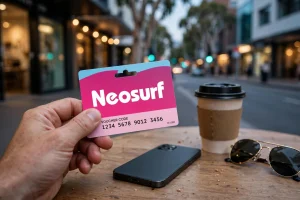
Casinos That Accept Neosurf in Australia: What’s Verified
A current operator statement is needed to confirm Neosurf acceptance; search listings and payment logos...

Casinos That Accept Neteller in Australia: What to Know
The guide separates Australian law from payment availability and examines what can—and cannot—be verified about...

PayID Casinos in Australia: Legal and Payment Checks
The Interactive Gambling Act 2001 prohibits operators from offering real-money online casino games to people...

Casinos That Accept PayPal in Australia: What to Check
A reference to PayPal alongside pokies describes a search, not proof that a particular site...

Casinos That Accept POLi in Australia: What to Verify
A careful look at what claims can establish about POLi deposits, withdrawals, and casino payment...

Tether USDT casinos in Australia: what to verify
Australian payment habits provide context, but they do not establish whether a gambling service accepts...

Casinos That Accept Visa in Australia: What to Know
Visa acceptance can vary by casino and card issuer, so a general comparison does not...

Dragon Link Online Pokies in Australia: What to Know
Understand what a Dragon Link label can—and cannot—confirm, alongside the payment, withdrawal and consumer-protection issues...

Instant Bank Transfer Casinos in Australia Explained
Bank-transfer options can apply to deposits without supporting withdrawals, and payment labels do not change...

New PayID Pokies in Australia: Payments Explained
PayID uses a phone number or email as a payment identifier, while deposits, withdrawals and...

Online pokies with PayID in Australia: payment guide
PayID is an identifier linked to a bank account, while the NPP carries transfers between...

Pay by Phone Casinos in Australia: PayID Explained
PayID uses a banking app and the New Payments Platform, so a mobile-number identifier does...

Real Cash Online Pokies in Australia: Bitcoin Guide
Bitcoin play may involve game credits rather than a withdrawable Bitcoin balance, while account checks...

Safe Online Pokies in Australia: What to Check
A practical way to assess offshore operators, payment uncertainties, withdrawal checks and the limits of...

Solana Casino Comparison in Australia: Payments and Risks
Using SOL does not change the rules for offshore casino services, and bonus terms, withdrawal...